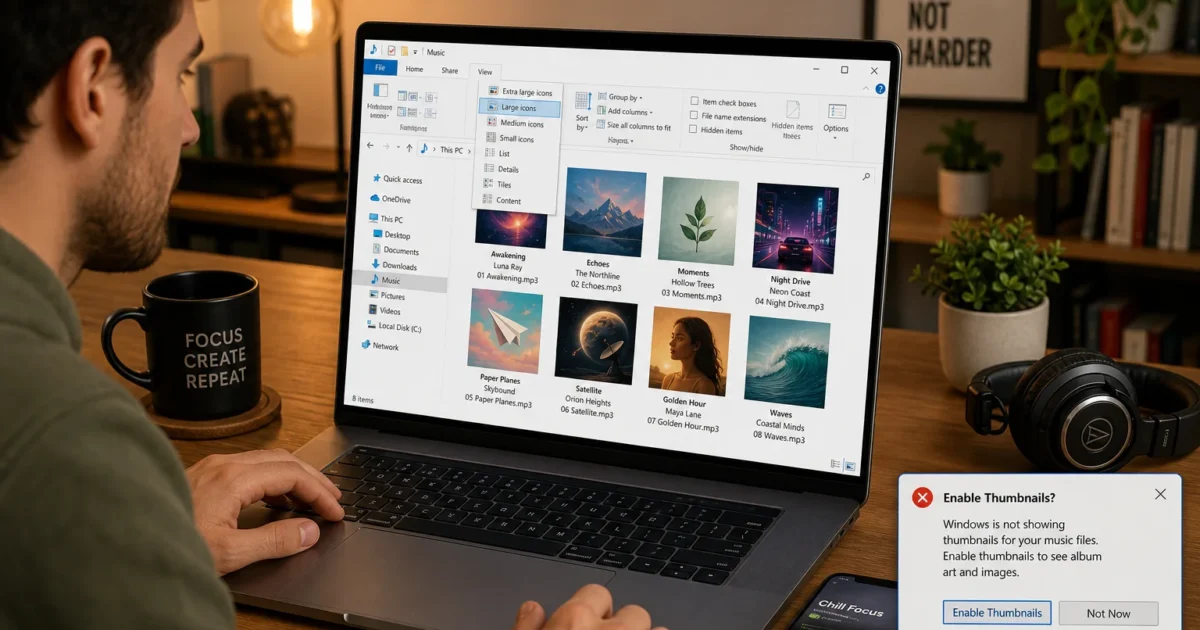
Your MP3 files are showing a generic music icon in Windows Explorer instead of album artwork. The cause is usually disabled thumbnail settings, art that isn’t properly embedded in the file’s ID3 tag, or a corrupted thumbnail cache.
Fix #1: Switch File Explorer to a thumbnail view
File Explorer’s Details and List views never display album art; they always show a generic music icon. If your folder is in one of those views, that’s your entire problem.
- Open File Explorer and navigate to your music folder.
- Click the View menu at the top of the window.
- Select Medium icons, Large icons, or Extra large icons.
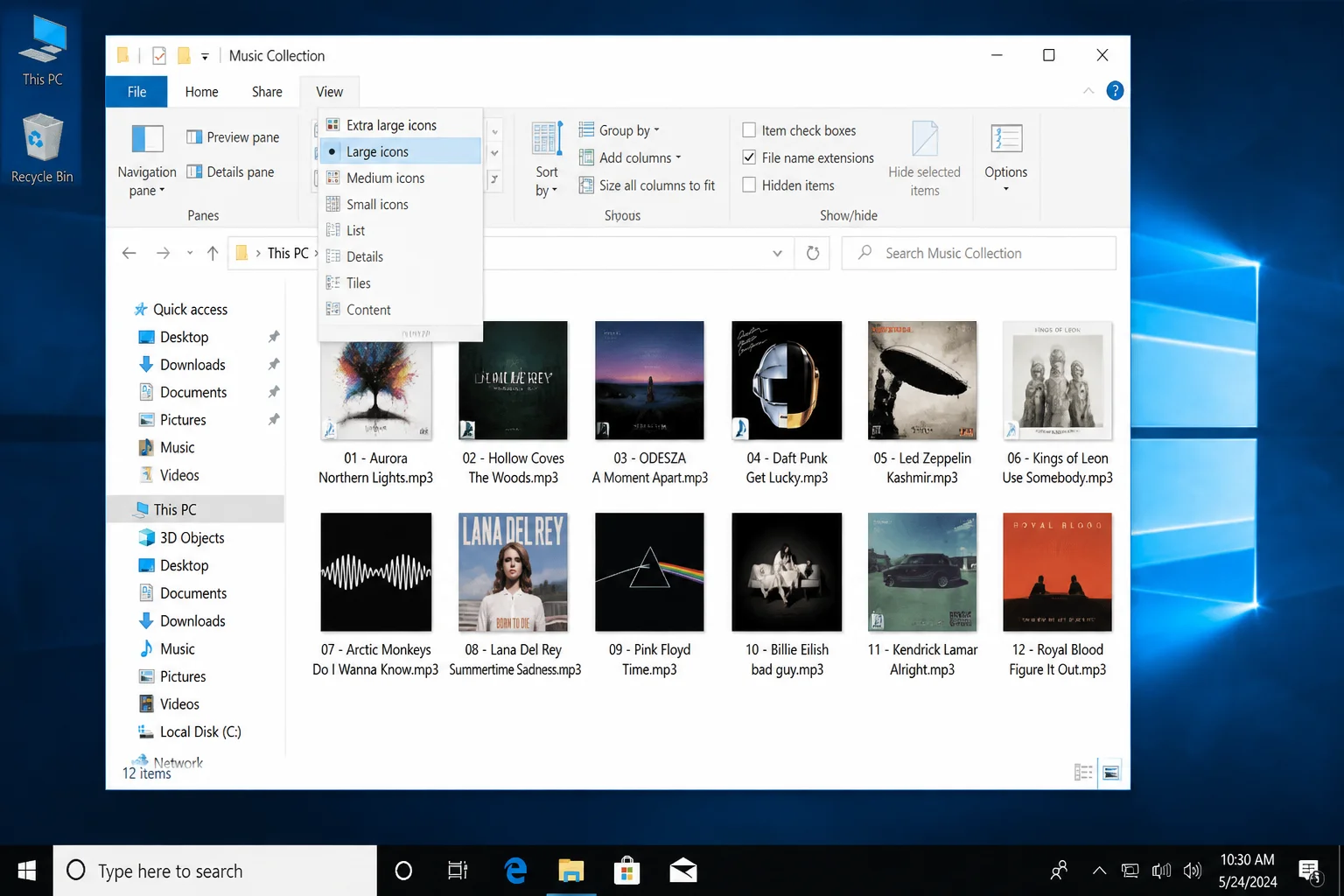
Album art should appear immediately for any MP3s that already have properly embedded artwork. If files still show generic icons, keep going.
Fix #2: Enable thumbnails in Windows settings
Two separate settings can block thumbnails system-wide regardless of your folder view. Check both.
Folder Options:
- Open File Explorer.
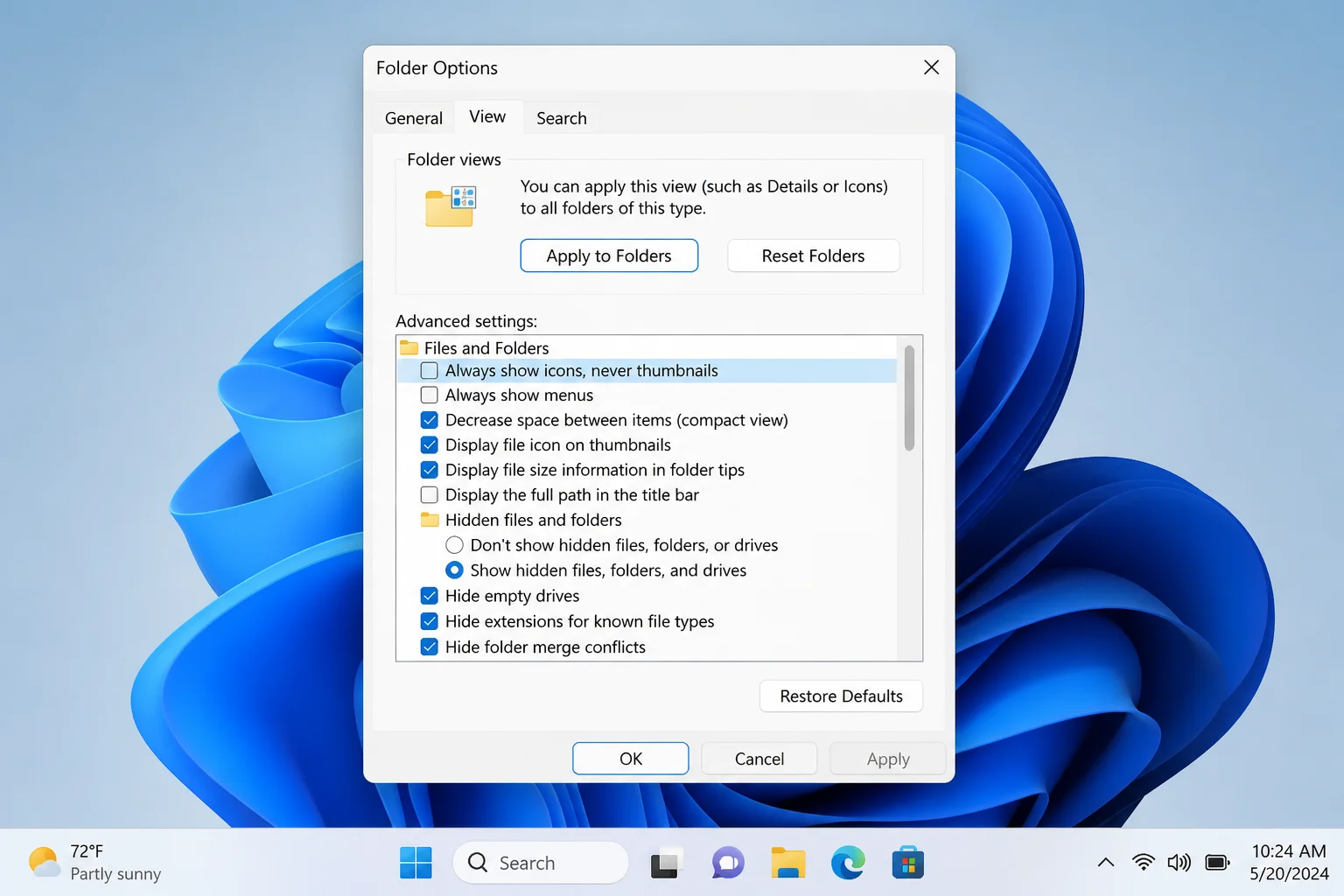
- On Windows 11, click the three-dot menu at the top and choose Options. On Windows 10, click the View tab and choose Options → Change folder and search options.
- Click the View tab.
- Make sure Always show icons, never thumbnails is unchecked.
- Click OK.
Performance settings:
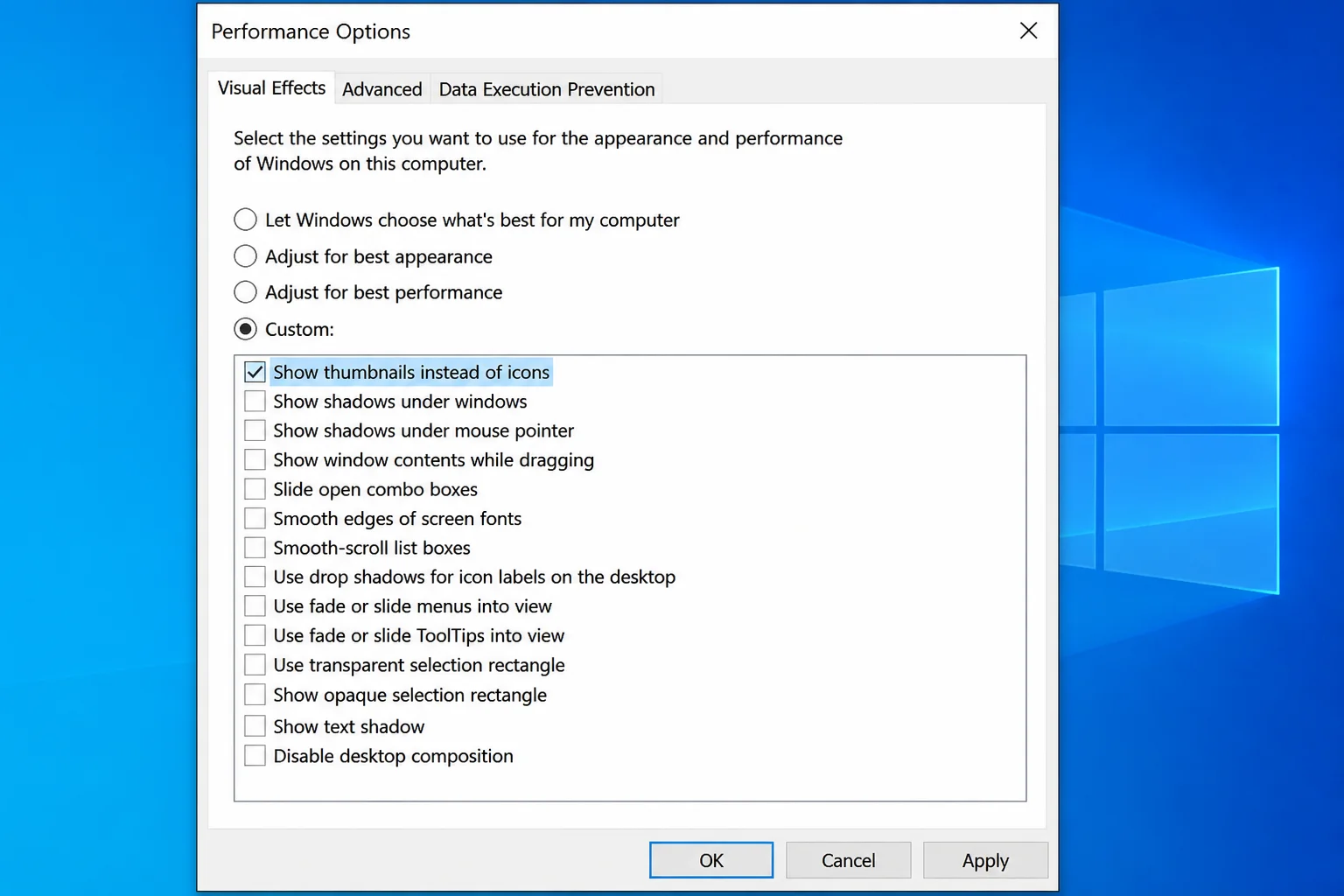
- Press
Windows + R, typesysdm.cpl, and press Enter. - Click the Advanced tab, then click Settings under the Performance section.
- On the Visual Effects tab, make sure Show thumbnails instead of icons is checked.
- Click OK.
Press F5 in File Explorer to refresh after correcting either setting. If album art now appears, you’re done.
Fix #3: Nudge Explorer to re-read files via Properties
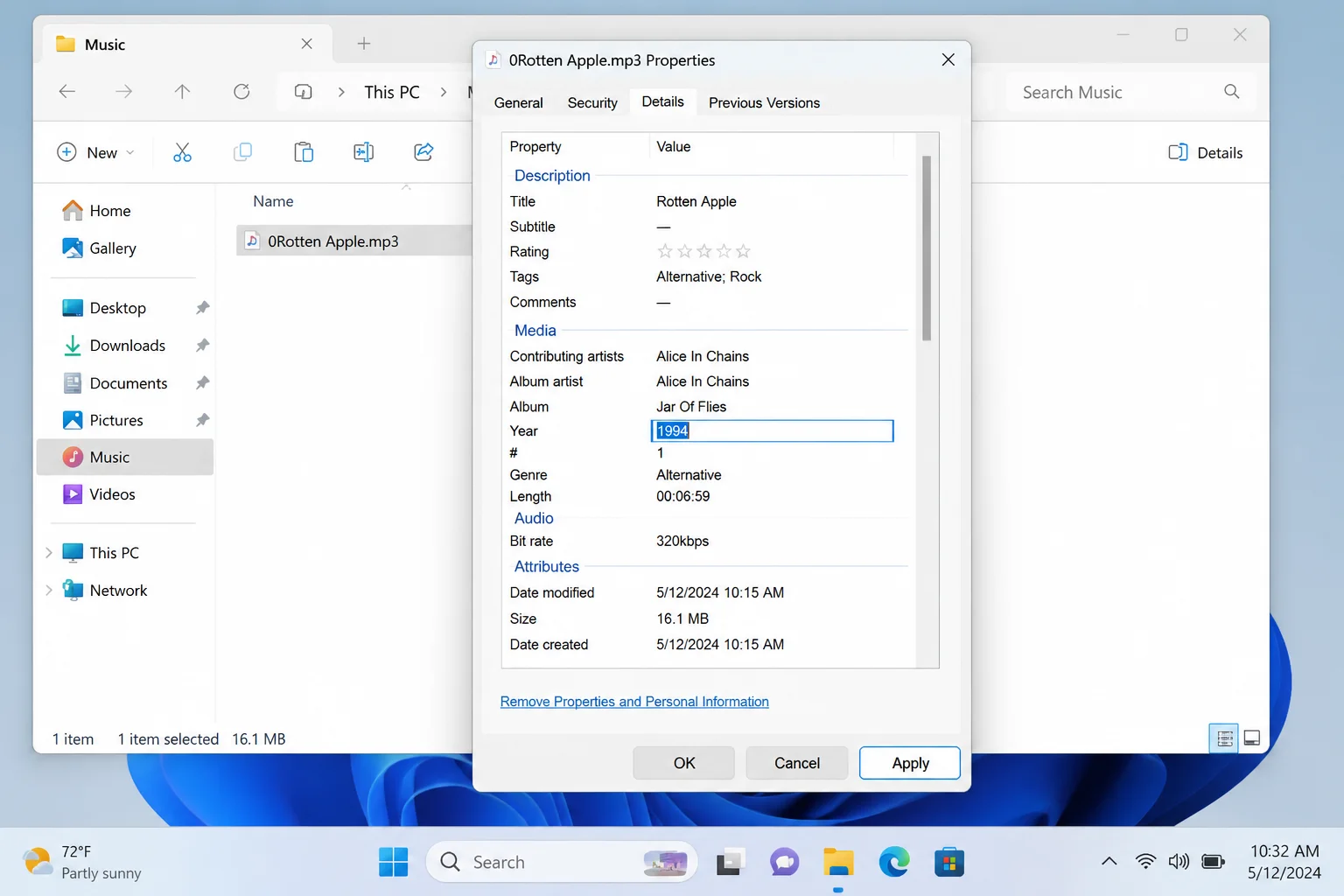
Editing any metadata field in a file’s Properties dialog forces Windows to re-read the file’s tags, which often unsticks thumbnails that should already be showing.
- In File Explorer, select all the MP3 files in the folder (
Ctrl + A). - Right-click the selection and choose Properties.
- Click the Details tab.
- Click any field, such as Year, delete the value, and retype it exactly as it was.
- Click Apply.
- Press
F5to refresh the folder.
Album art frequently appears right after you click Apply. If it doesn’t, the thumbnail cache itself is likely the culprit. Fix #4 handles that directly.
Fix #4: Clear the thumbnail cache
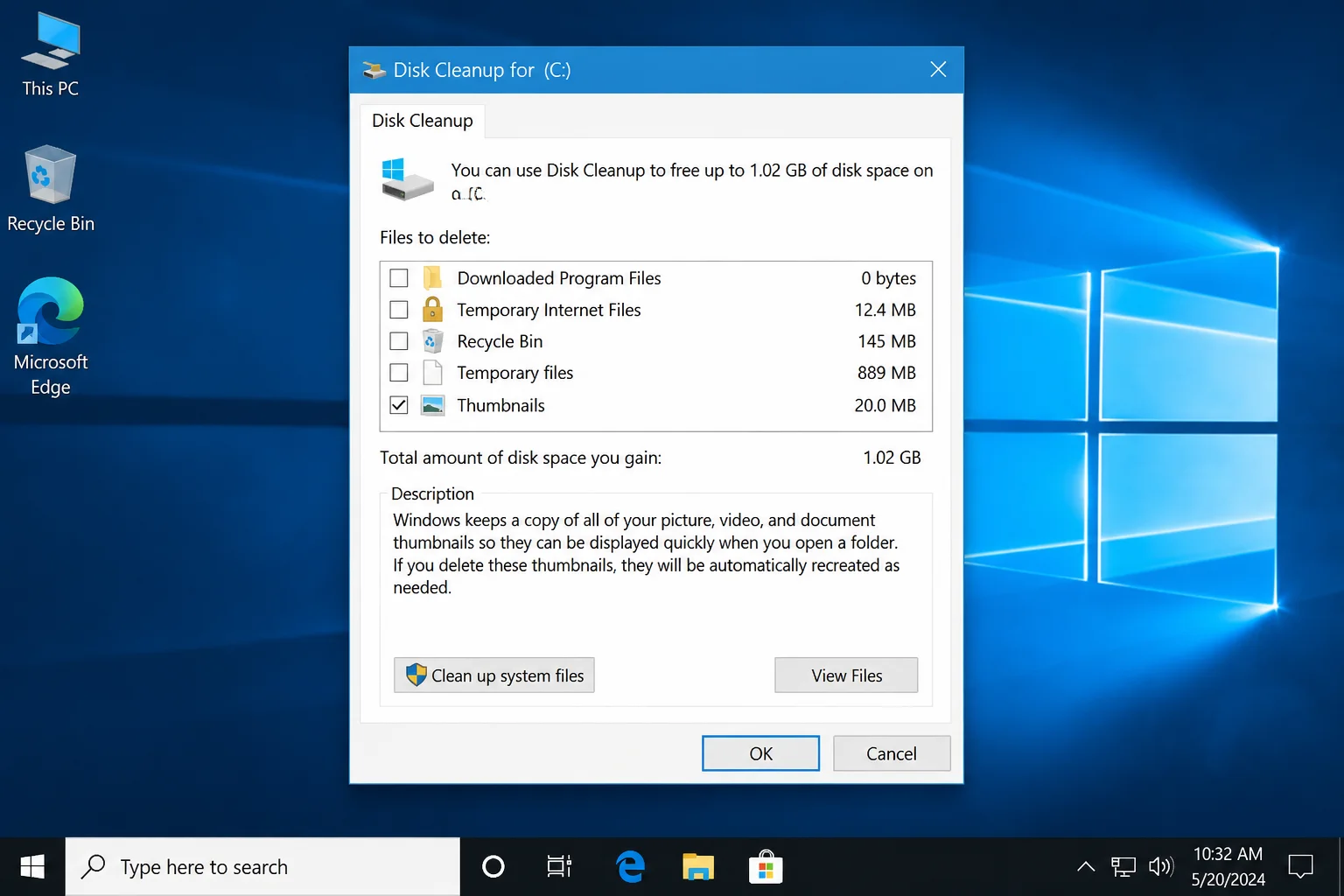
Windows stores cached thumbnail images for speed. If that cache is corrupted, it keeps displaying stale generic icons even after you’ve embedded art correctly. Clearing it forces a full rebuild.
- In the Start menu search box, type Disk Cleanup and open it.
- Select your system drive (usually C:) and click OK.
- Check the box next to Thumbnails.
- Click OK, then confirm by clicking Delete Files.
- Restart your PC, then open File Explorer and navigate to your music folder.
Windows rebuilds thumbnail previews as you browse. So far so good if album art starts appearing. If files still show generic icons even after the rebuild, the art probably isn’t embedded correctly in the files themselves. Fix #5 and #6 address that.
Fix #5: Embed album art using Windows Media Player
If your music player shows album art but File Explorer doesn’t, the artwork is likely stored in the player’s own database rather than embedded inside the MP3 file. Embedding it directly is the cleanest fix, with no third-party tools needed.
On Windows 11 (Windows Media Player app):
- Open Windows Media Player from the Start menu.
- Go to your Music library and find the album or track missing artwork.
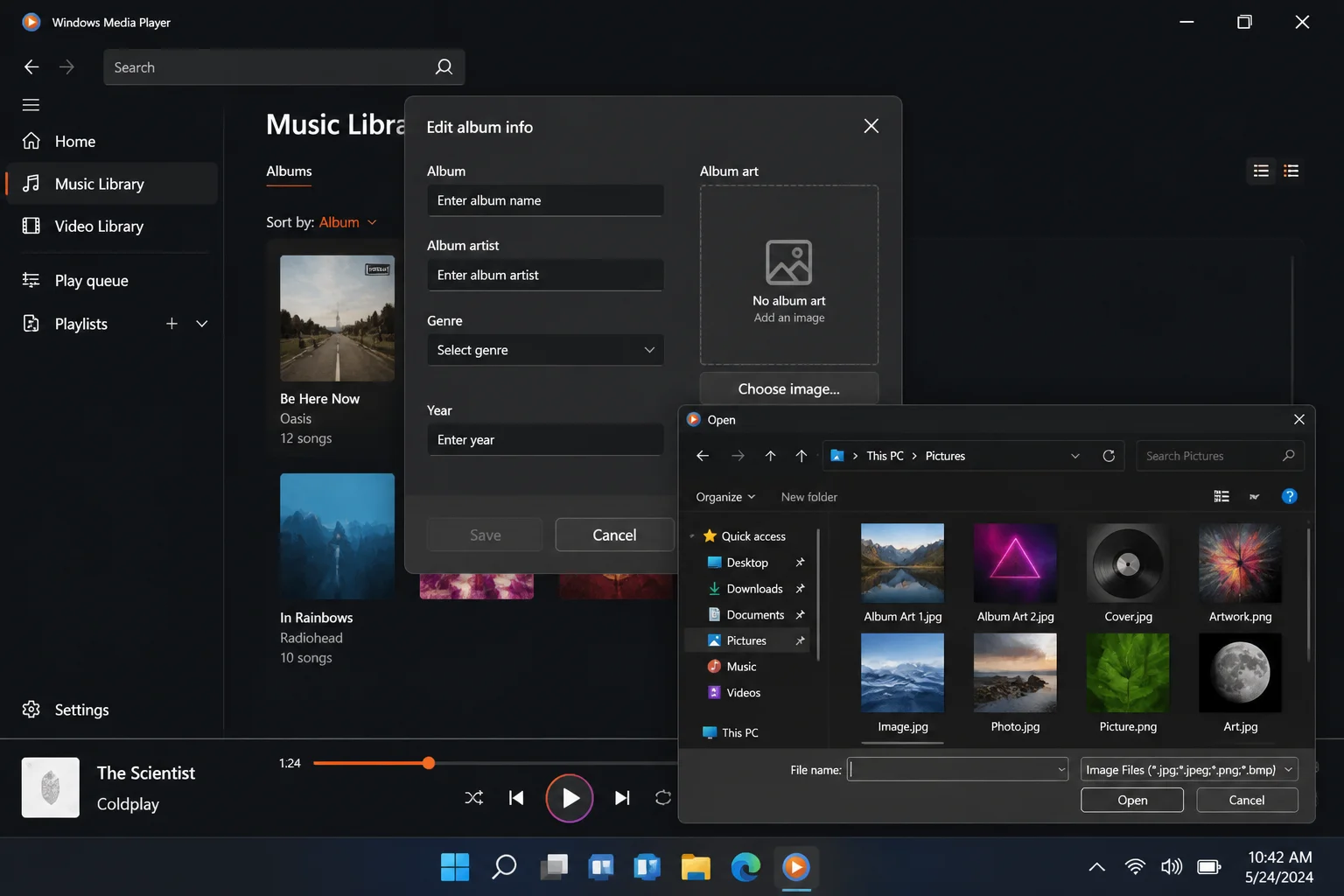
- Click the three-dot menu next to the track or album and choose Edit info.
- Click the album art area in the Edit dialog and select a JPEG image from your computer.
- Click Save, then press
F5in File Explorer to refresh.
On Windows 10 (classic Windows Media Player):
- Open Windows Media Player.
- Navigate to the album in your Music library.
- Prepare your cover image. JPEG format works best.
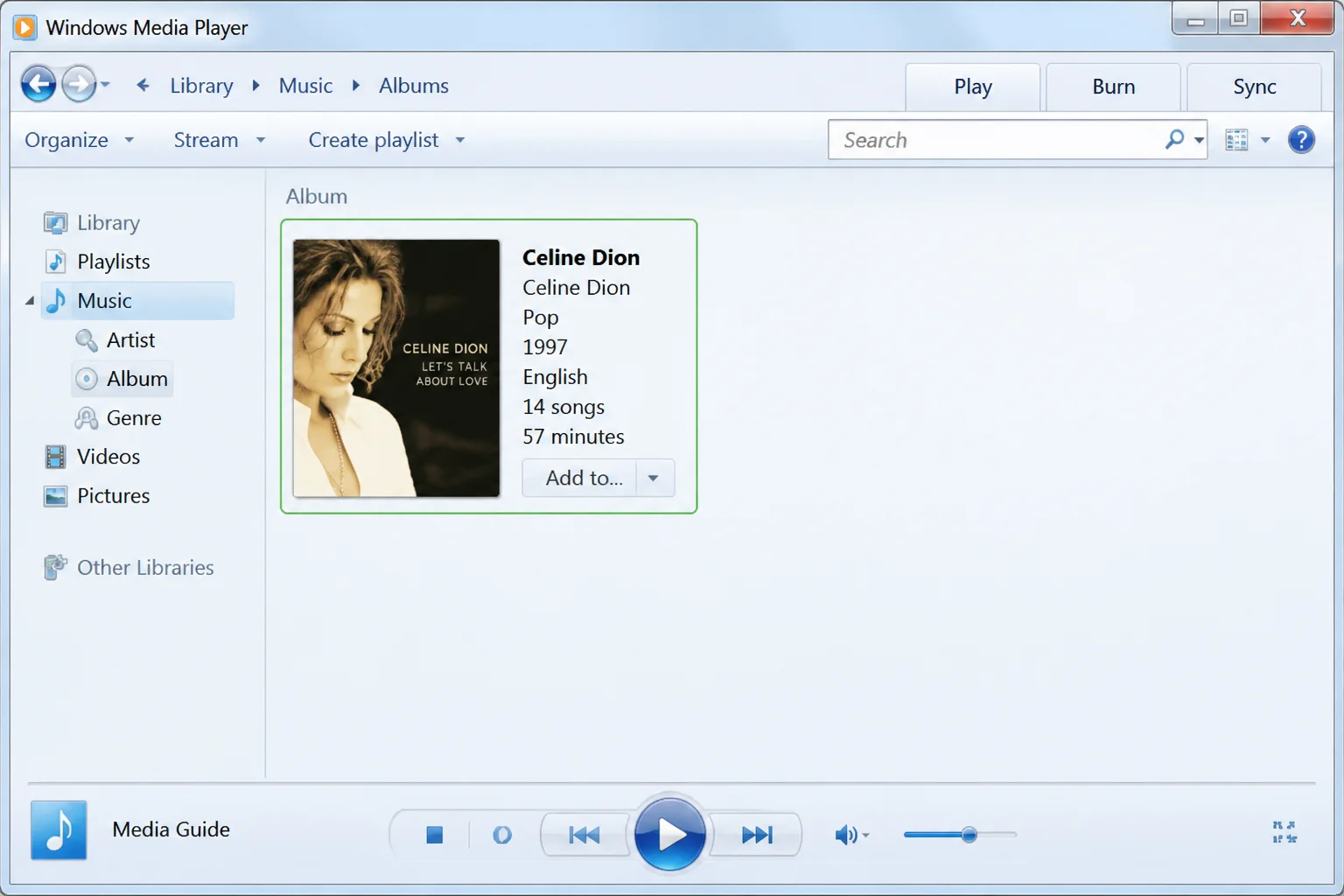
- Drag and drop the JPEG image directly onto the album thumbnail in WMP’s library view.
- Return to File Explorer and press
F5to refresh.
The generic icon in File Explorer should be replaced by album art after the refresh. If it still isn’t, the tag format is likely the issue. Fix #6 resolves that.
Fix #6: Re-save tags in MP3tag using ID3v2.3 format
Windows 10 and 11 don’t reliably support ID3v2.4 tags, the newer format that many tag editors write by default. If some of your MP3s show art and others don’t, or you added art with a tag editor and Explorer still ignores it, switching to ID3v2.3 with UTF-16 encoding fixes it in most cases. PNG artwork can also cause problems; Explorer handles JPEG art more reliably.
- Download and install MP3tag (free, from mp3tag.de).
- Open MP3tag, then go to File → Open Folder and navigate to your music folder.
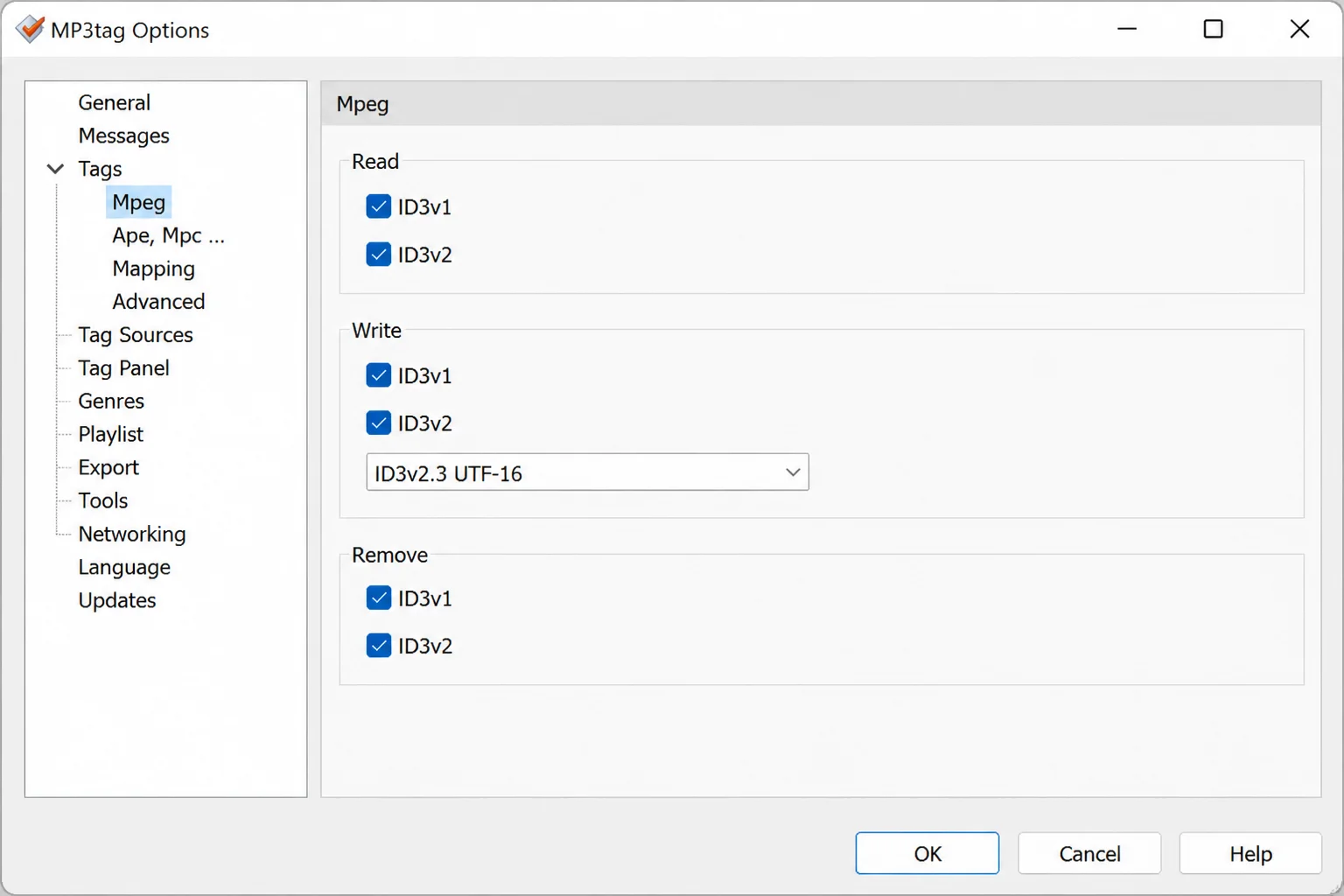
- Open Tools → Options → Tags → Mpeg.
- Under Write, check ID3v2 and set the version to 2.3 and the encoding to UTF-16. Click OK.
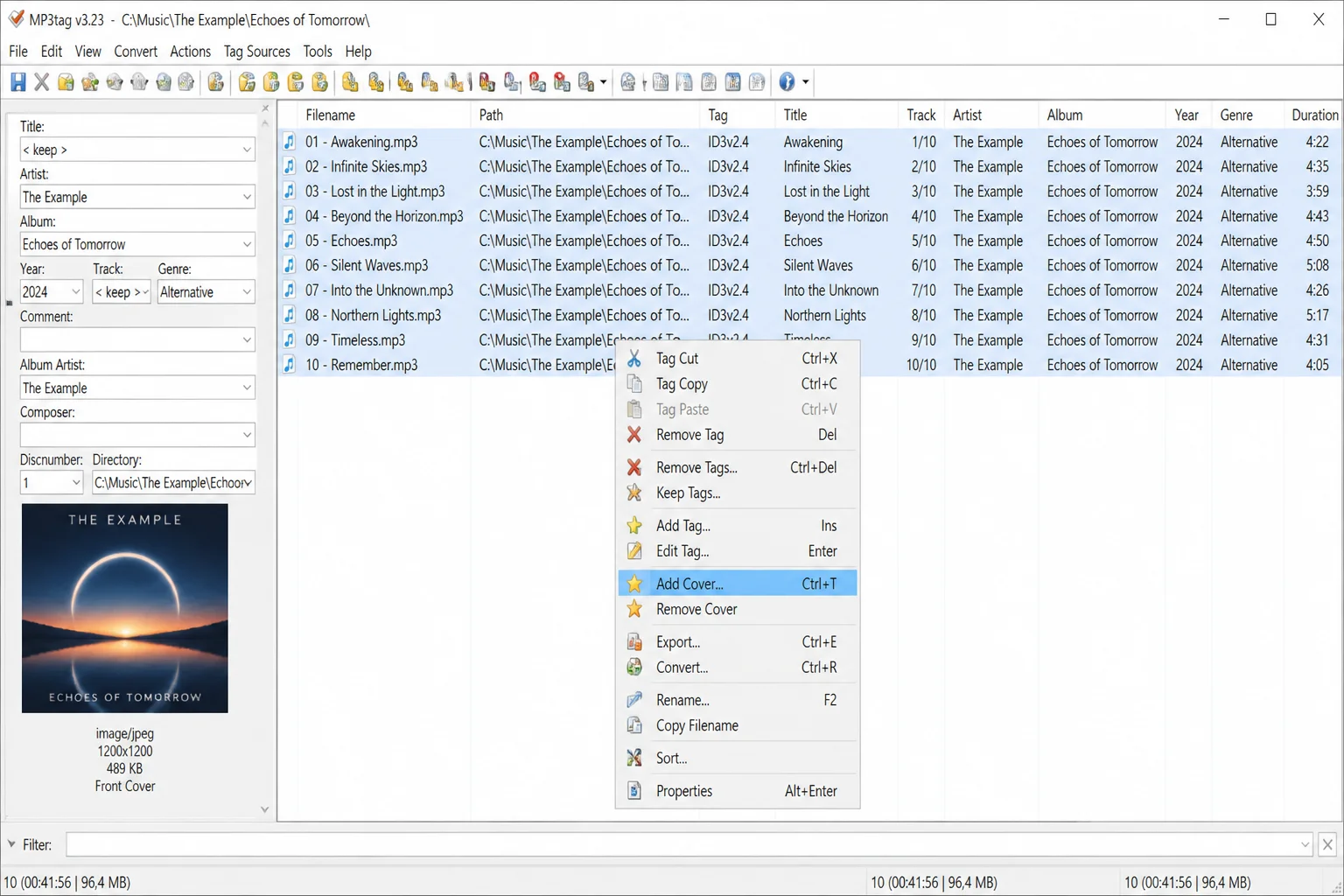
- Select all affected files in MP3tag (
Ctrl + A). - In the tag panel on the left, right-click the album art box and choose Add Cover.
- Select a JPEG image for the album art. If your artwork is a PNG file, convert it to JPEG first using Paint or IrfanView, and keep the image under 2000×2000 pixels for the best compatibility.
- Press
Ctrl + Sto save the tags. - Press
F5in File Explorer to refresh your music folder.
After saving, File Explorer should display album art thumbnails on refresh. If it still doesn’t, run through Fix #4 (clearing the thumbnail cache); sometimes the cache holds stale data that needs clearing before the new tags take effect.
What about FLAC, WAV, and M4A files?
The fixes above are aimed at MP3 files, which Windows Explorer handles reasonably well once the tags are correct. Other formats are less reliable out of the box:
- FLAC and WAV: Windows Explorer’s built-in metadata support for these formats is limited. Installing Icaros (a free shell extension; search for “Icaros shell extension” to find the download) adds proper thumbnail support for FLAC, WAV, and other audio formats without replacing any Windows components.
- M4A: Thumbnails can break after a Windows update due to corrupted file-association registry keys. Icaros often resolves this too; for persistent issues, reinstalling the codec or repairing the file type association is the next step.
When none of these fixes work
If album art is still missing after all six fixes, Group Policy may be overriding your thumbnail settings. On Windows 10/11 Pro or Enterprise, open gpedit.msc and confirm that Turn off the display of thumbnails and only display icons (under User Configuration → Administrative Templates → Windows Components → File Explorer) is set to Disabled or Not configured. If even that checks out, re-embedding the artwork fresh using MP3tag on all affected files, starting from a clean tag rewrite in ID3v2.3 format, is the most reliable path to a permanent fix. You can also check this page for additional troubleshooting steps.
Conclusion
Fix #6 (re-saving tags in MP3tag with ID3v2.3 format and JPEG artwork) is a solid choice for permanently solving this for most people. Windows’ poor support for ID3v2.4 tags is the root cause in the majority of cases. If your art was already embedded correctly and Explorer just wasn’t rendering it, Fix #4 (clearing the thumbnail cache) is usually enough on its own. Either way, keeping MP3tag around to manage your library’s tags going forward is worth it; it gives you direct control over the exact format Windows needs to display album art reliably. For more information on managing your music library, you can visit this page or watch this video for additional tips.