 Ananya Dixit · February 13, 2026 · 4 min read
In the dynamic corporate world, your skill set is the only thing that makes you stand out from the crowd. A powerful PowerPoint presentation is very important for individuals and employees who are facing clients directly. So, add something more to your skill set by learning one of the easiest ways to elevate your presentation: adding custom fonts.
It is simple for both Windows and Mac users. Thus, in this guide, we will walk you through the steps to use custom fonts in PowerPoint.
Why Use Custom Fonts in PowerPoint?
Let’s explore why using custom fonts truly matters when you are presenting or pitching an idea, marketing strategy, or even finishing your assignment.
- It creates a powerful first impression on the client or person viewing the presentation. In case you use generic fonts like Arial or Calibri, your slides might look ordinary. Consequently, a font chosen carefully according to the purpose of the presentation instantly grabs attention and reflects your creativity. For example, a sans-serif font looks more tech-focused, while a handwritten font will look more personal.
- Branding consistency matters in case you are creating a marketing deck, business pitch, or presentation. Most of the brands use certain special fonts in their logos, on their website, and on social media. So, using the same custom font builds credibility, maintains consistency throughout your presentation, and reinforces brand recognition.
- Custom fonts also enhance readability and audience engagement. As a matter of fact, some fonts are readable but dull, while others are creative but very hard to read. For example, modern fonts like Montserrat, Lexend, or Poppins provide better spacing with clear letterforms, unlike traditional fonts.
Step-by-Step Guide to Download Custom Fonts
There is a separate process to download and install the custom fonts, which is different for both Windows and Mac. Follow the steps below to integrate new fonts into your PowerPoint presentation.
Part 1: How to Add Custom Fonts on Windows
On Windows, you first have to install the fonts. Once the fonts are installed, they will be automatically added to Microsoft PowerPoint.
Step 1: Download and Install the Font
Download and install any font that you want to use from a trusted website such as Google Fonts, DaFont, or Font Squirrel. They usually get downloaded as .zip files, so you have to unzip and extract them.
Step 2: Extract the Font File
- Right-click on the downloaded file.
- Select Extract All.
- Then, click and open the extracted folder.
Inside the folder, you will basically see a .otf or .ttf file.
Step 3: Install the Custom Font
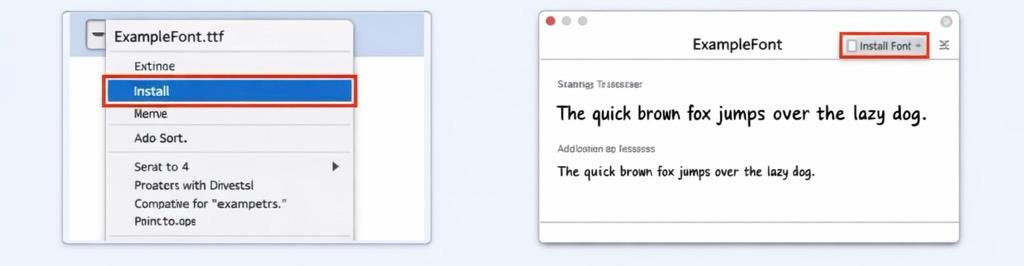
There are two ways to install the downloaded font. The first method is a quick install process, where you have to right-click on the .ttf or .otf file and select Install.
The second method is manual. You have to double-click on the font file and select the Install button at the top.
Step 4: Use the Font in PowerPoint
- Search for and open Microsoft PowerPoint.
- Navigate to the Home tab.
- Select the font dropdown menu.
- After that, click on the newly installed font.
You might have to restart PowerPoint in case it was open during the installation process.
Part 2: How to Add Custom Fonts on Mac
If you are using macOS, the fonts will be managed by the Font Book application.
Step 1: Download the Font File
First, download the .ttf or .otf font file. Also, if the file is zipped, double-click on the file and select Extract All.
Step 2: Open the Font File
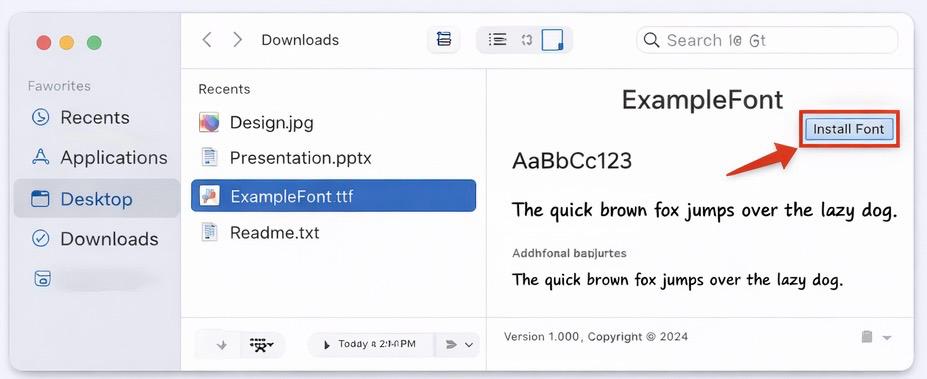
In this step, you have to double-click on the font file so that it can open in the Font Book app.
Step 3: Install the Font
Select and click the Install Font in the preview window. After you follow the above-mentioned steps, your downloaded font will be available in all the applications, including PowerPoint.
Step 4: Access the Font in PowerPoint
- Search for and open PowerPoint.
- Navigate to the font dropdown menu.
- Now, select the newly downloaded font.
Pro Tips For Using Custom Fonts
To maintain professionalism in your presentation slides, use only two or three fonts in each presentation. Also, ensure to pair the bold heading font with the body font and always avoid fonts that are overly decorated in case of business presentations.
Remember that design is all about clarity and readability, and not just about creativity.
Related Posts

Ananya Dixit is a seasoned content writer and editor with over seven years of experience in tech, finance, and media. She has written extensively about Microsoft technologies, covering multiple versions of Windows—from Windows 7 and 10 to the latest Windows 11 releases. Her work includes in-depth troubleshooting guides, feature breakdowns, how-to tutorials, optimization tips, and coverage of new system updates.Ananya is also passionate about trending topics in the tech world, including AI tools as her personal favorite, digital privacy, productivity apps, and the newest features rolling out across Android and iOS. Read Ananya’s Full Bio

