Word has three built-in commands that instantly fill a blank paragraph with placeholder text, no copy-pasting from a browser required. Type the formula, press Enter, and you’re done.
Method 1: Generate Random English Text with =rand()
This inserts readable English sample text pulled from Word’s own help content, useful when you need something that looks like real prose without being distracting.
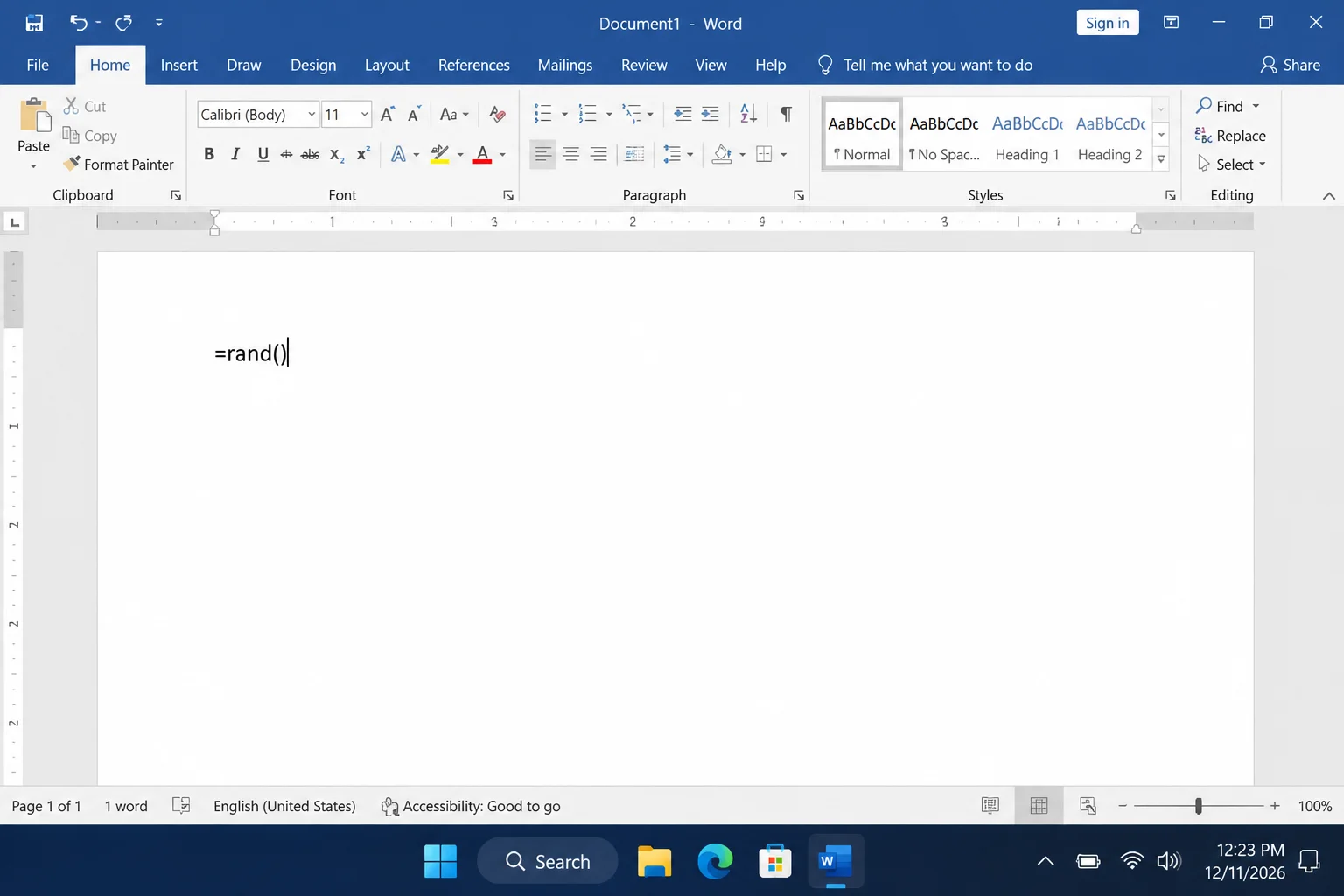
- Click into a blank paragraph where you want the text to appear. The formula must be the only content on that line.
2. Type =rand() exactly as shown. Case doesn’t matter.
3. Press Enter with your cursor immediately after the closing parenthesis.
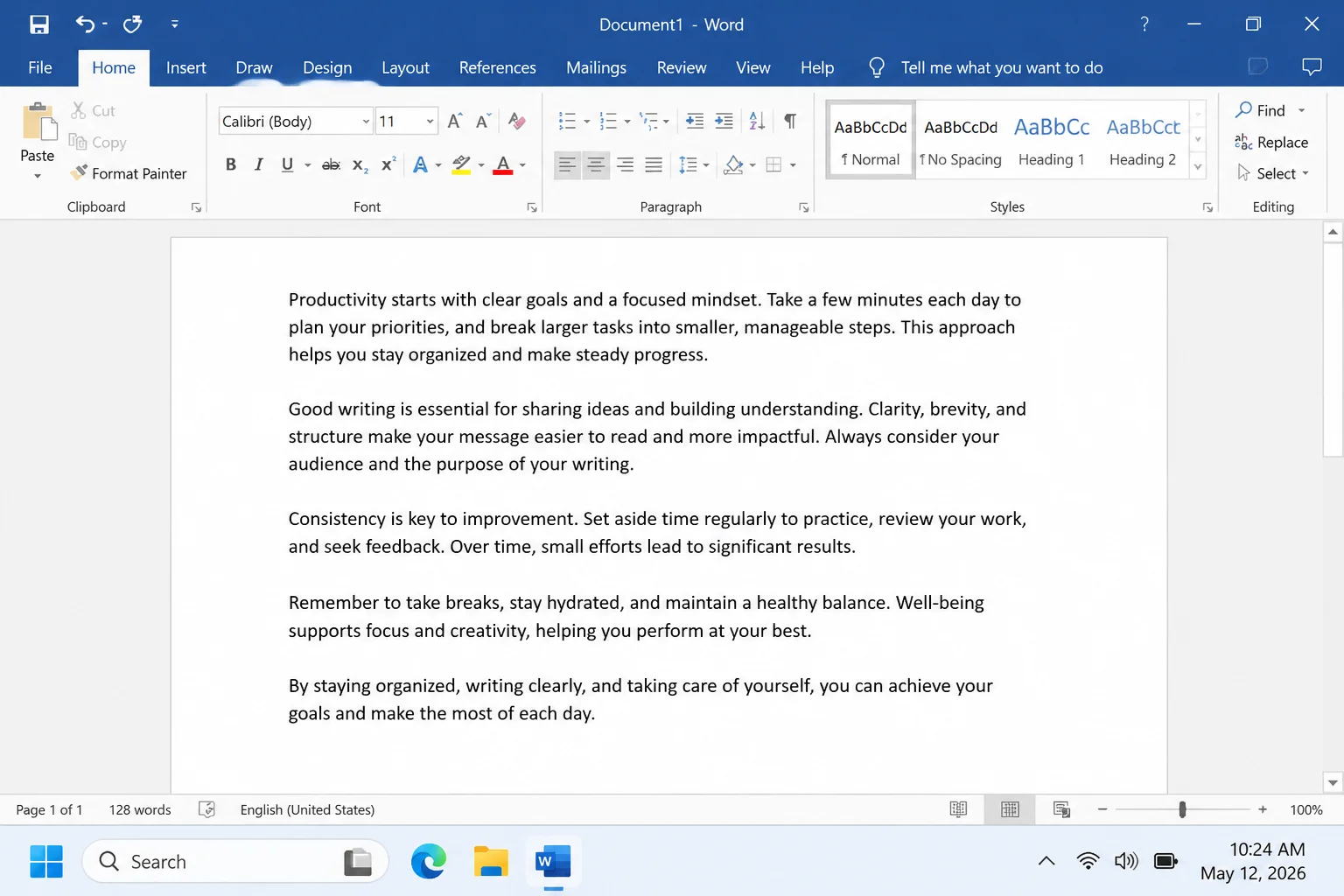
Word replaces the formula with several paragraphs of sample text describing Word features. The default output is typically 5 paragraphs of 3 sentences each, though this can vary by version.
Control the paragraph and sentence count
Use the format =rand(p,s) to specify exactly how much text you want. Replace p with the number of paragraphs and s with the number of sentences per paragraph.
For example, to get 3 paragraphs with 4 sentences each:
=rand(3,4)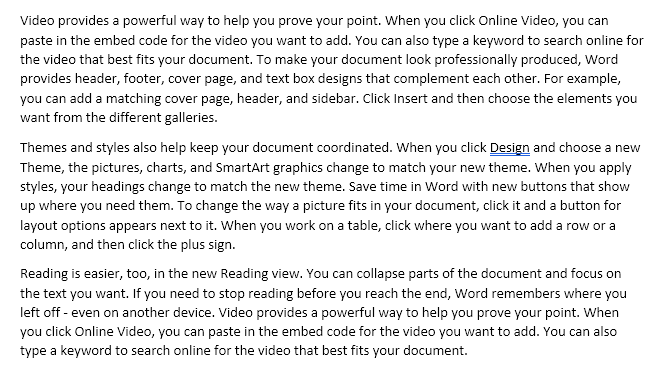
You can omit the sentence count. =rand(3) Word will use its default (usually 3 sentences per paragraph). A single command can generate up to roughly 9,560 words in some versions before hitting the limit; run it multiple times if you need more.
Method 2: Generate Lorem Ipsum with =lorem()
If you want classic Latin placeholder text that won’t be read by anyone, =lorem() is the right tool, especially for design mockups and layout testing.
- Click into a blank paragraph.
2. Type =lorem() for the default amount, or =lorem(p,s) to control output. For example, =lorem(5,3) gives you 5 paragraphs of 3 sentences each.
3. Press Enter.
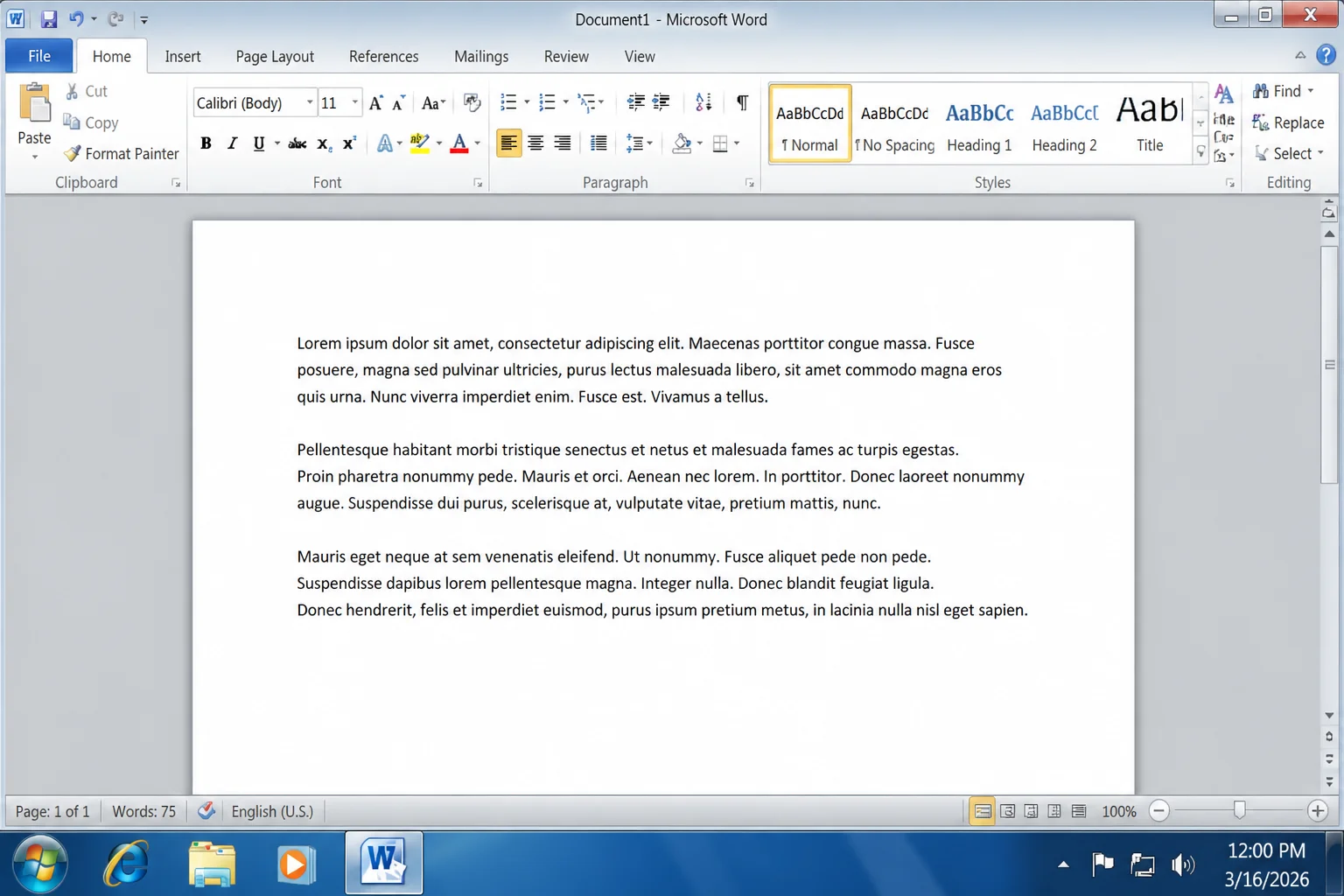
The inserted text starts with “Lorem ipsum dolor sit amet…” and Word doesn’t spell-check it automatically, so you won’t get a document full of red squiggles the way you would if you pasted lorem text from an online generator.
Method 3: Generate the Classic “Quick Brown Fox” Text with =rand.old()
This produces the old-school pangram text, “The quick brown fox jumps over the lazy dog,” that older versions of Word used for =rand(). It’s handy for font and typography testing because the sentence uses every letter of the alphabet.
- Click into a blank paragraph.
2. Type =rand.old() for the default, or =rand.old(p,s) for a custom amount. Example: =rand.old(4,2) gives 4 paragraphs of 2 sentences each.
3. Press Enter.
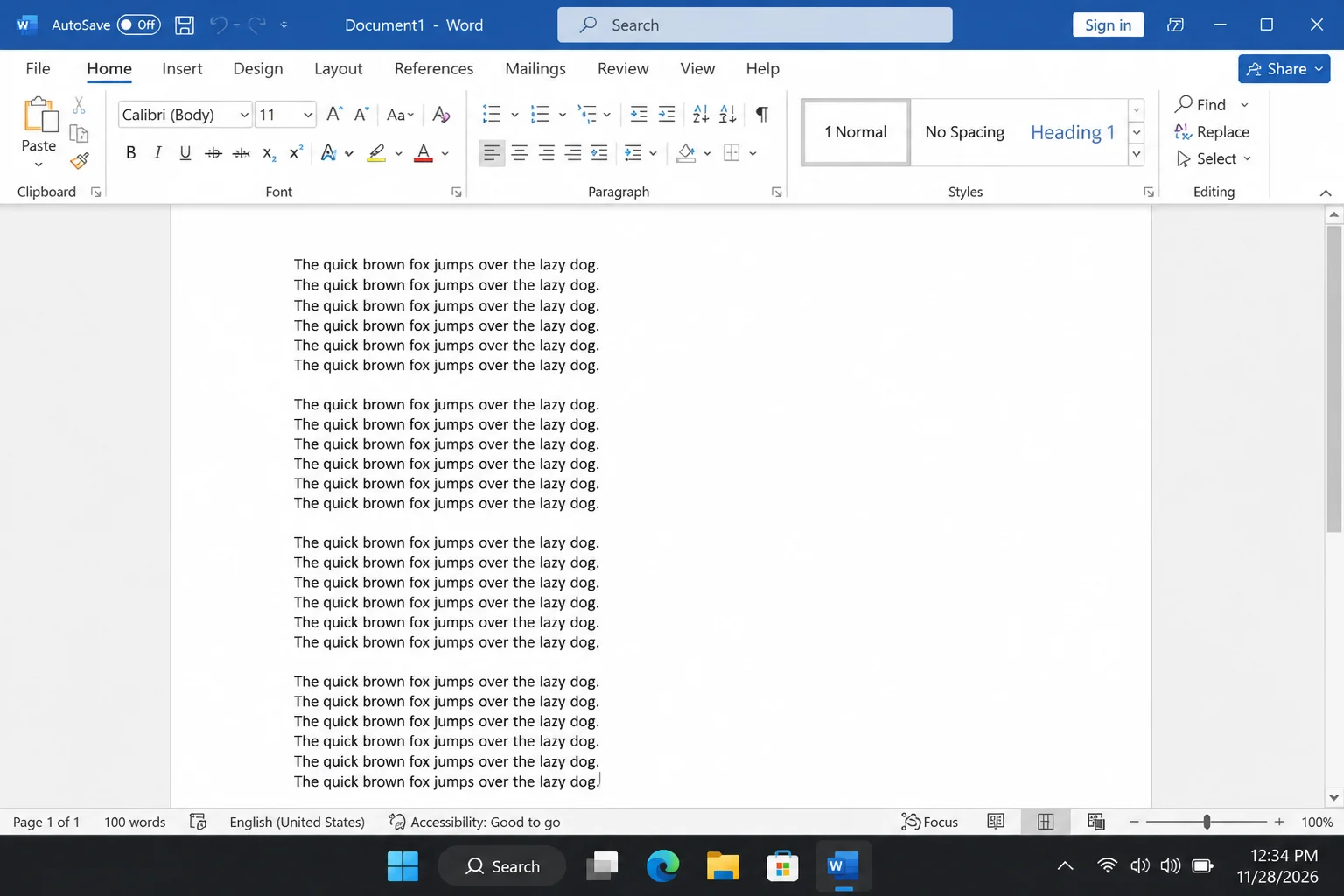
This function works in Microsoft 365, Word 2021, Word 2019, and Word 2016 on both Windows and Mac. It’s technically undocumented by Microsoft, but it’s been reliable across all current builds.
Quick Reference
| Command | Output | Best for |
|---|---|---|
=rand() | English help-style text | General placeholder prose |
=rand(p,s) | English, custom length | Controlled filler content |
=lorem() | Latin lorem ipsum | Design mockups, layout testing |
=lorem(p,s) | Latin, custom length | Precise lorem ipsum blocks |
=rand.old() | “Quick brown fox” pangram | Font and typography testing |
If the Formula Isn’t Working
If you type the formula and press Enter but nothing happens, or the text just stays on screen as typed, one of these is almost always the cause.
Fix #1: Make sure the formula is alone in the paragraph
The formula must be the only content in the paragraph. Any stray character before the = or after the ) will stop it from triggering. Check for:
- A bullet point or numbered list formatting on the paragraph
– A space or tab before the =
– Any character after the closing )
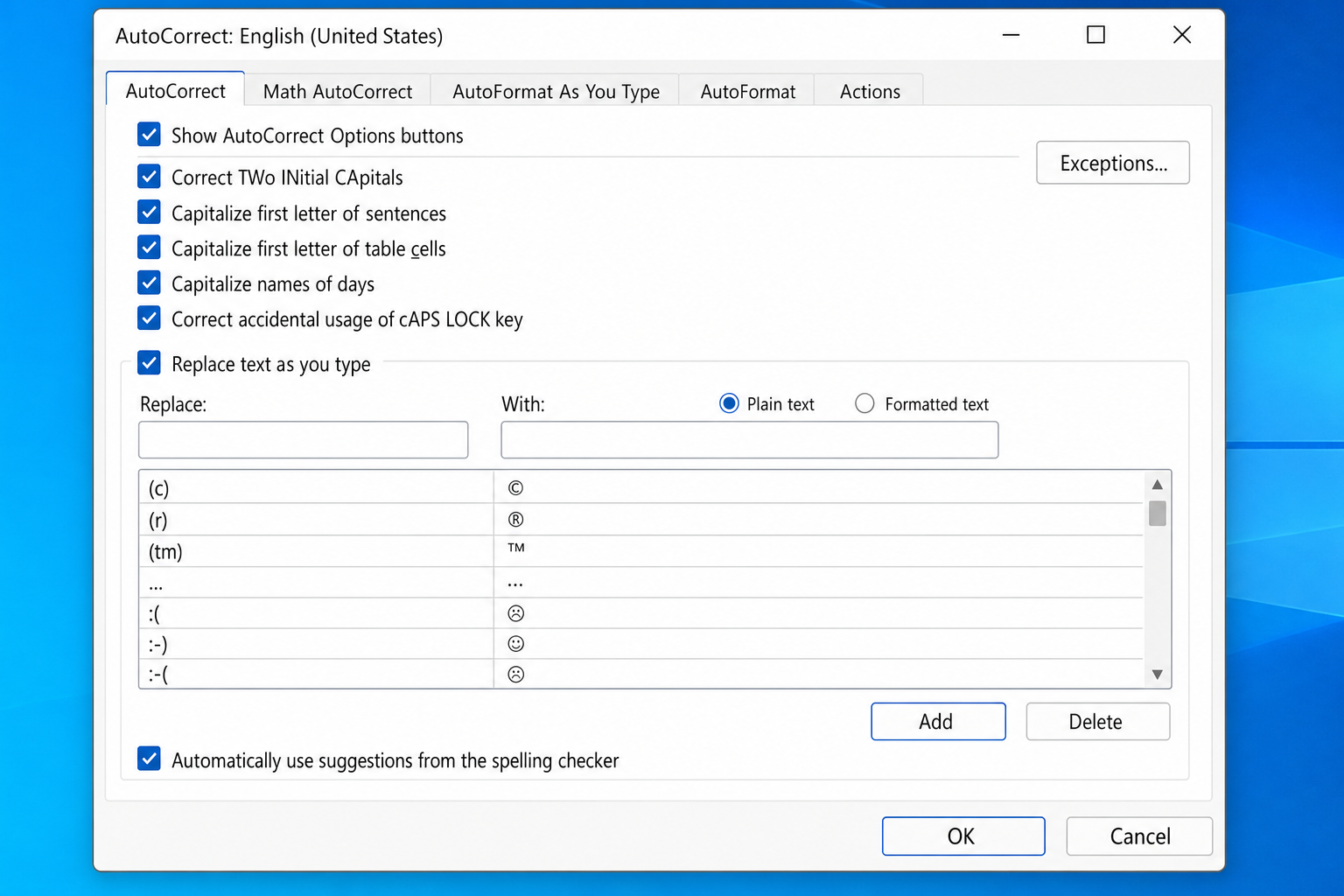
Fix #2: Enable “Replace text as you type” in AutoCorrect
The formula relies on Word’s AutoCorrect engine. If that setting is off, the commands won’t fire.
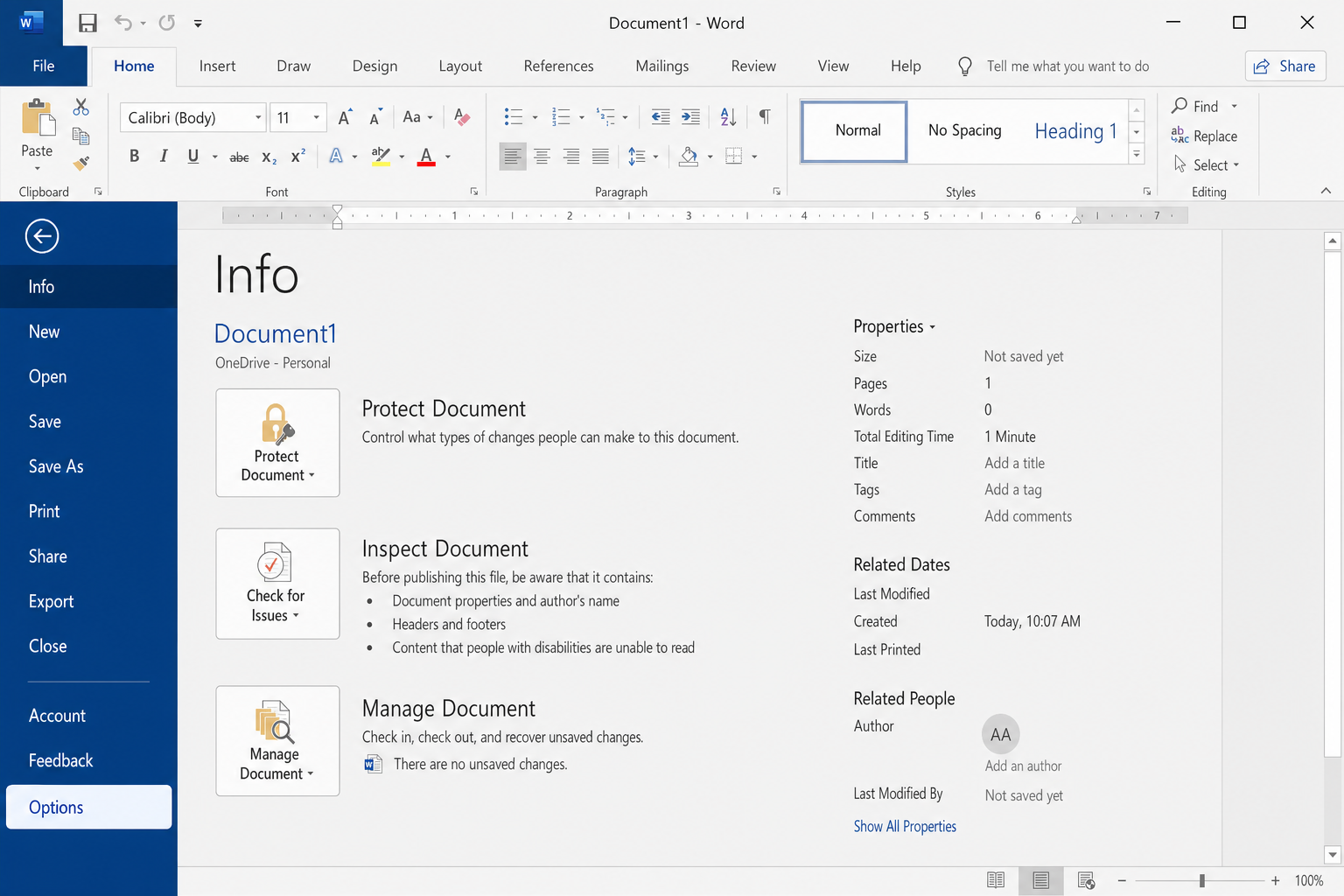
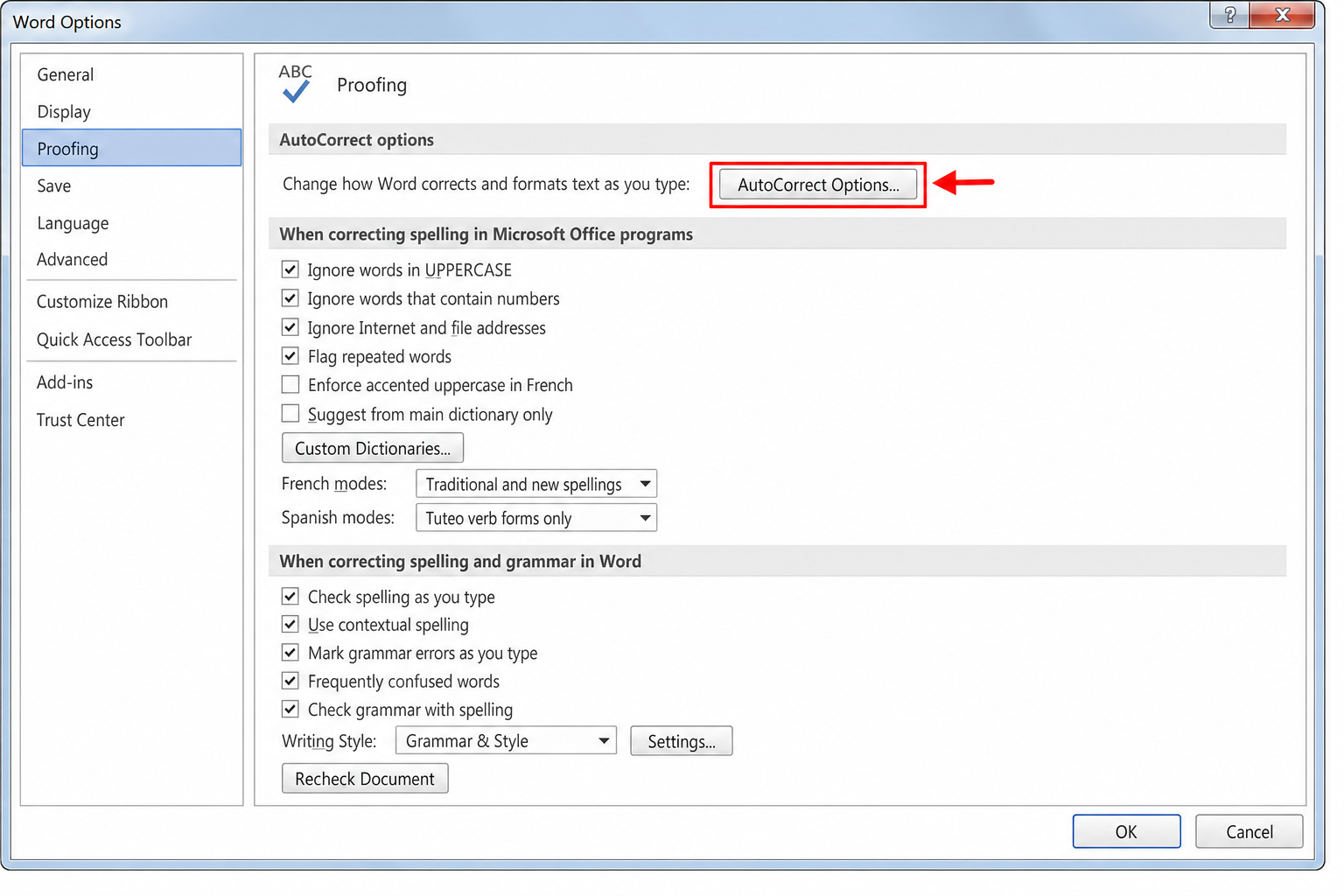
- Click File > Options.
- In the left pane, click Proofing.
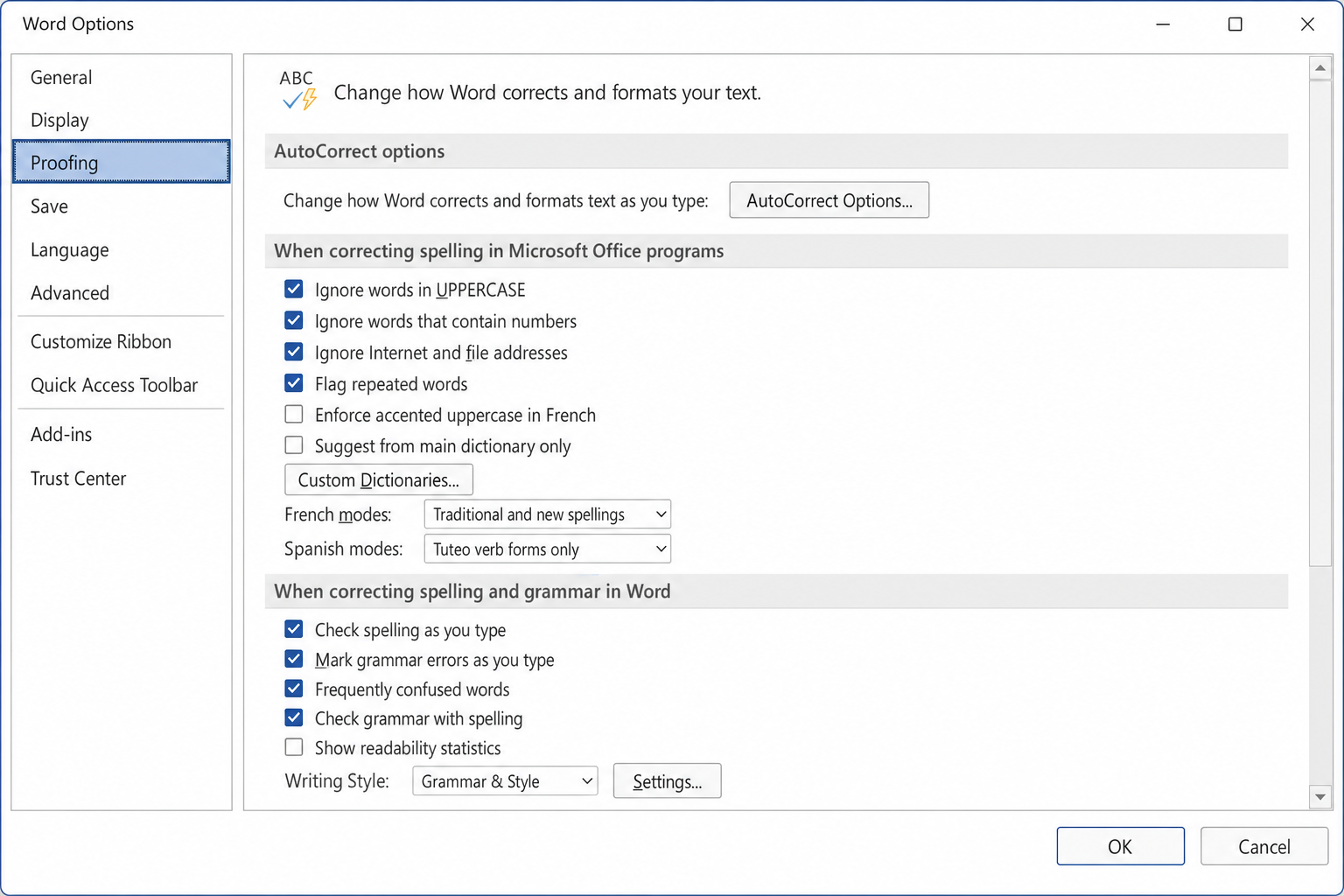
- Click AutoCorrect Options…
- On the AutoCorrect tab, make sure Replace text as you type is checked.
5. Click OK, then OK again to close Word Options.
Fix #3: Stop spell-check from flagging your placeholder text
If Word is underlining every word in your generated lorem ipsum in red, here’s the quick fix:
- Select all the generated placeholder text.
2. Go to Review > Language > Set Proofing Language.
3. Check Do not check spelling or grammar and click OK.
This only affects the selected text. The rest of your document continues to spell-check normally.
Other Ways to Get Placeholder Text in Word
The built-in formulas cover most situations, but a few alternatives are worth knowing:
- Word templates: Many built-in templates (File > New) already include placeholder text. Swap it out for your own content or use it as-is for layout testing.
– Quick Parts / AutoText: Save your own reusable text block via Insert > Quick Parts > AutoText. Good if you use the same boilerplate repeatedly.
– Online generators: Sites like lipsum.com let you generate themed or multilingual placeholder text. Paste it into Word, then use the proofing language fix above to suppress spell-check.
– Copilot in Microsoft 365: If your organization has Copilot enabled, you can prompt it to draft placeholder paragraphs directly in the document.
Wrapping Up
=rand() handles the vast majority of placeholder text needs. It’s fast, requires no add-ins, and the output reads naturally. If you’re doing design or layout work where Latin text is less distracting, =lorem() is the better pick. The only time =rand.old() earns its keep is when you specifically need pangram coverage for font testing.
If you run into other issues with Word, check out our guides on Microsoft Word not responding, how to insert arrows in Word documents, and how to add and show the Developer tab in Microsoft Word.