You’re about to reinstall Windows, or your PC just died, and you realize you never wrote down the license keys for your installed software. Before you reach for a key finder tool, there’s something important to know: Windows 10 and 11 now use digital licenses that don’t work the same way as the 25-character keys of old, and many apps like Microsoft 365 authenticate via your account rather than a local key.
This guide covers four methods, starting with no-extra-software options and ending with third-party tools that can pull keys for hundreds of installed applications.
Before You Start: What Kind of License Do You Have?
Not all license keys are recoverable, or even necessary to recover. Understanding your license type saves you a lot of frustration.
Check how Windows is activated first:
- Windows 11: Go to Settings > System > Activation
- Windows 10: Go to Settings > Update & Security > Activation
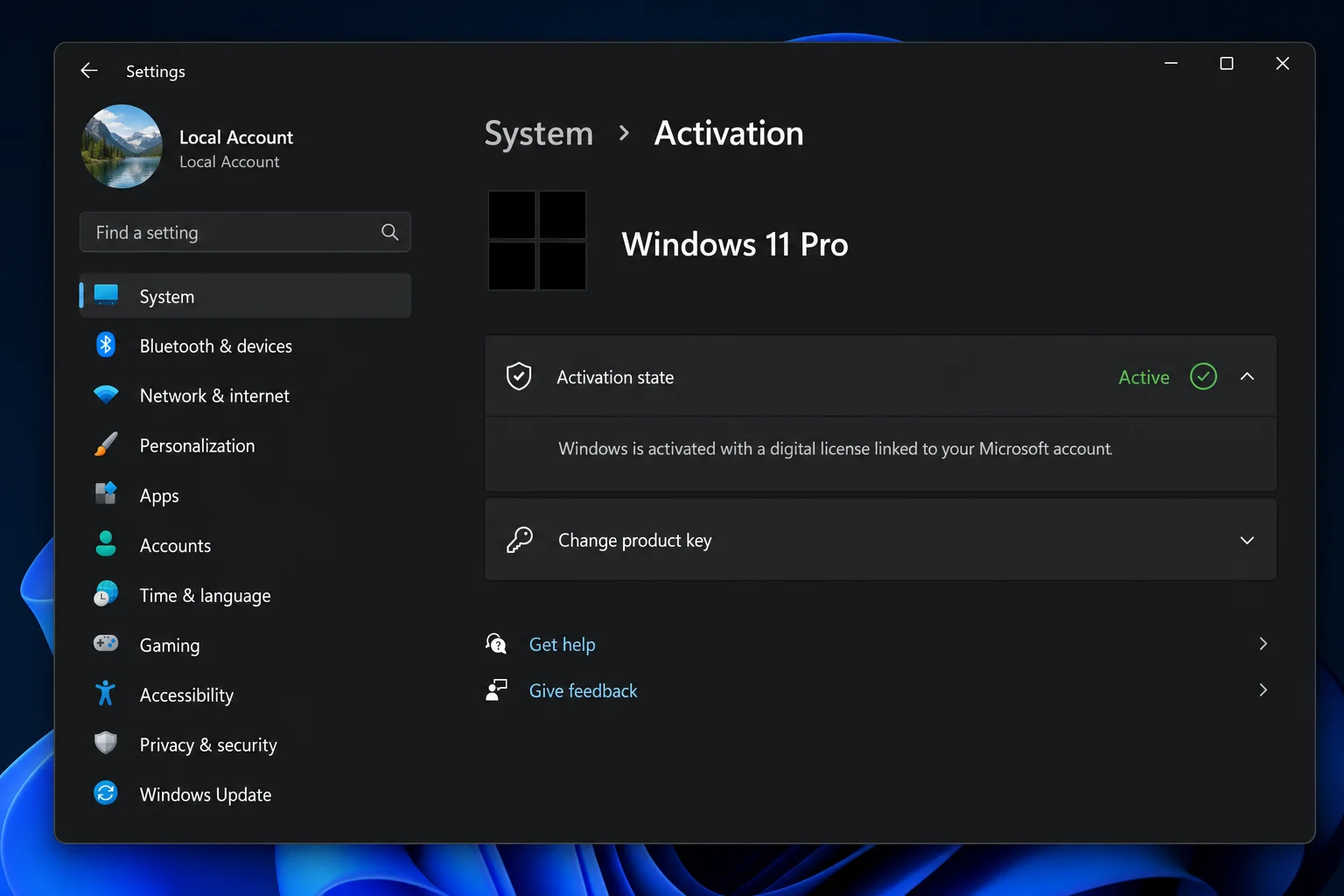
Look for one of these messages:
- “Windows is activated with a digital license”, Your activation is tied to your hardware. Reinstall the same edition of Windows on the same PC, connect to the internet, and it auto-activates. No key needed.
- “Windows is activated with a digital license linked to your Microsoft account”, Even easier. Sign into your Microsoft account during setup and it reactivates automatically.
- “Windows is activated” with a product key shown, You have a traditional retail or OEM key that a key finder tool can read.
For Microsoft 365 and subscription software: There’s no locally stored key to recover. Activation is tied to your online account. Just sign back in at microsoft.com and manage your installs from there.
For older perpetual software (Office 2019/2021, Adobe CS, games, and most classic desktop apps): Keys are usually stored in the registry and are recoverable with the methods below.
Method 1: Check the BIOS/UEFI for Your OEM Windows Key (No Software Needed)
OEM PCs from Dell, HP, Lenovo, and others have the original Windows key embedded in the firmware. You can read it from the command line without installing anything.
- Right-click Start and select Terminal (Admin) or Windows PowerShell (Admin).
- Run this command in PowerShell:
(Get-WmiObject -query 'select * from SoftwareLicensingService').OA3xOriginalProductKeyOr, if you prefer Command Prompt:
wmic path softwarelicensingservice get OA3xOriginalProductKey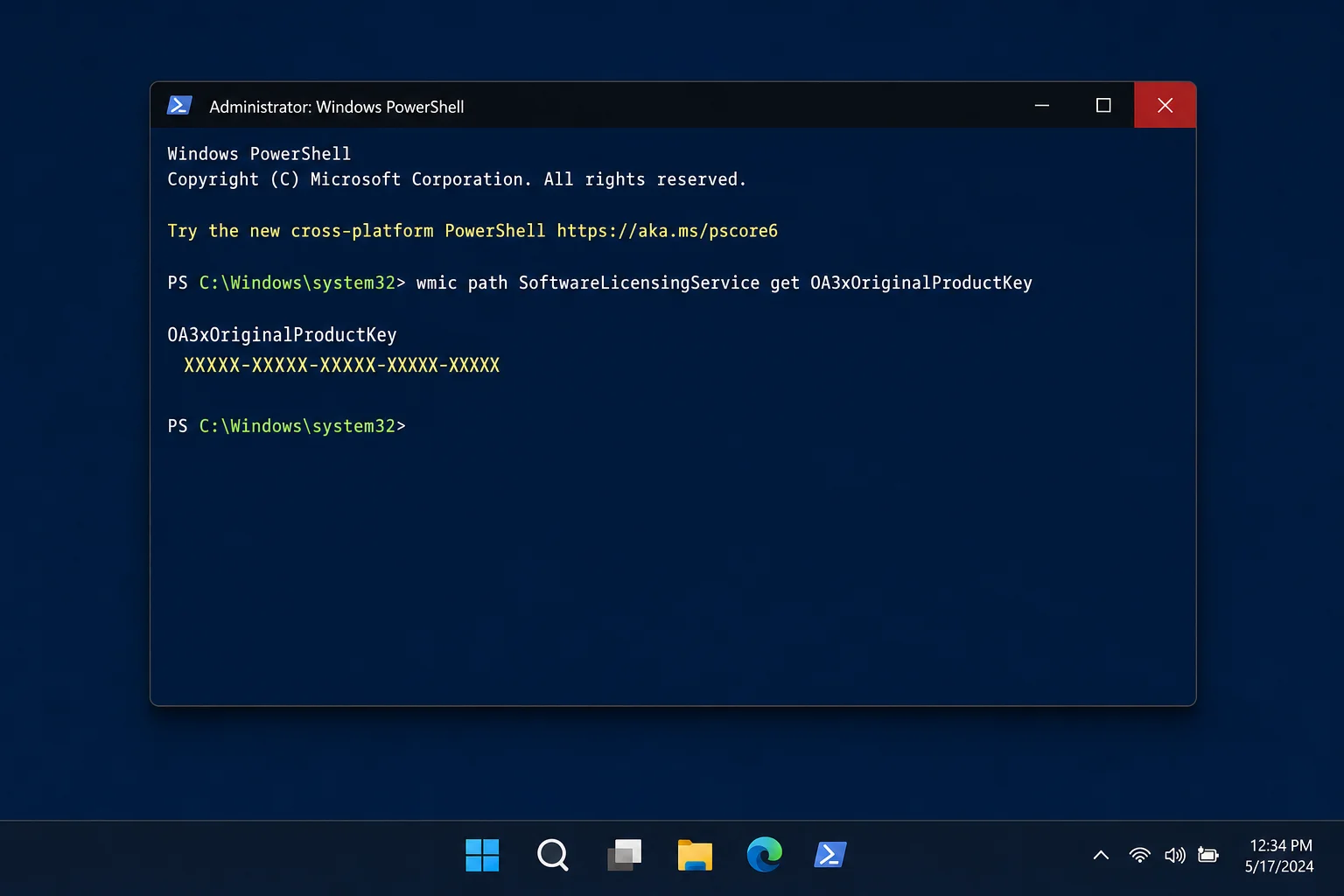
- If a 25-character key appears, that’s your original OEM Windows key stored in firmware. Write it down or copy it somewhere safe.
If the output is blank: Your system is using a digital license or a retail key entered manually, not a firmware-embedded key. Move to Method 2.
Important caveat: This key reflects the Windows edition that came with your PC (e.g., Windows 11 Home). If you upgraded to Pro, this key won’t activate the Pro edition, but it’s still useful for reinstalling the original OEM edition.
Method 2: Use ProduKey to Read Your Installed Keys
ProduKey from NirSoft is the most reliable free tool for reading Windows and Office product keys from a live or offline Windows installation. It’s portable, so no installation is required.
Download and run ProduKey
- Download ProduKey from the official NirSoft site: nirsoft.net/utils/product_cd_key_viewer.html
- Extract the ZIP file to a folder.
- Right-click ProduKey.exe and select Run as administrator, this is required to access all registry hives.
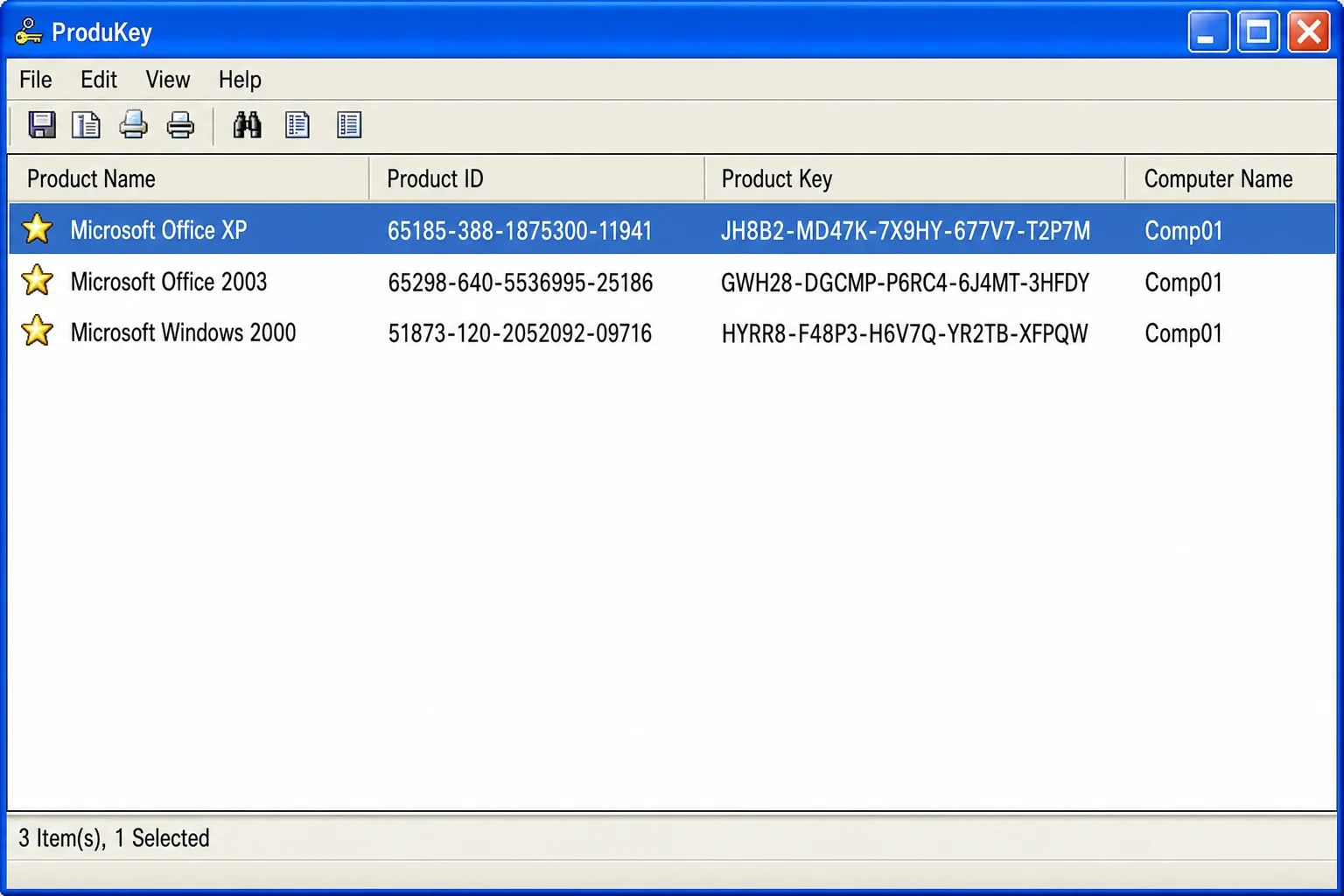
- ProduKey immediately scans the current installation and lists any keys it finds, including Windows, older perpetual Office versions, and some third-party software.
- To save the results, go to File > Save to text file.
Scan a dead or external Windows drive with ProduKey
If your original PC won’t boot, connect the old drive via USB or internally, then:
- Open ProduKey as administrator on the working PC.
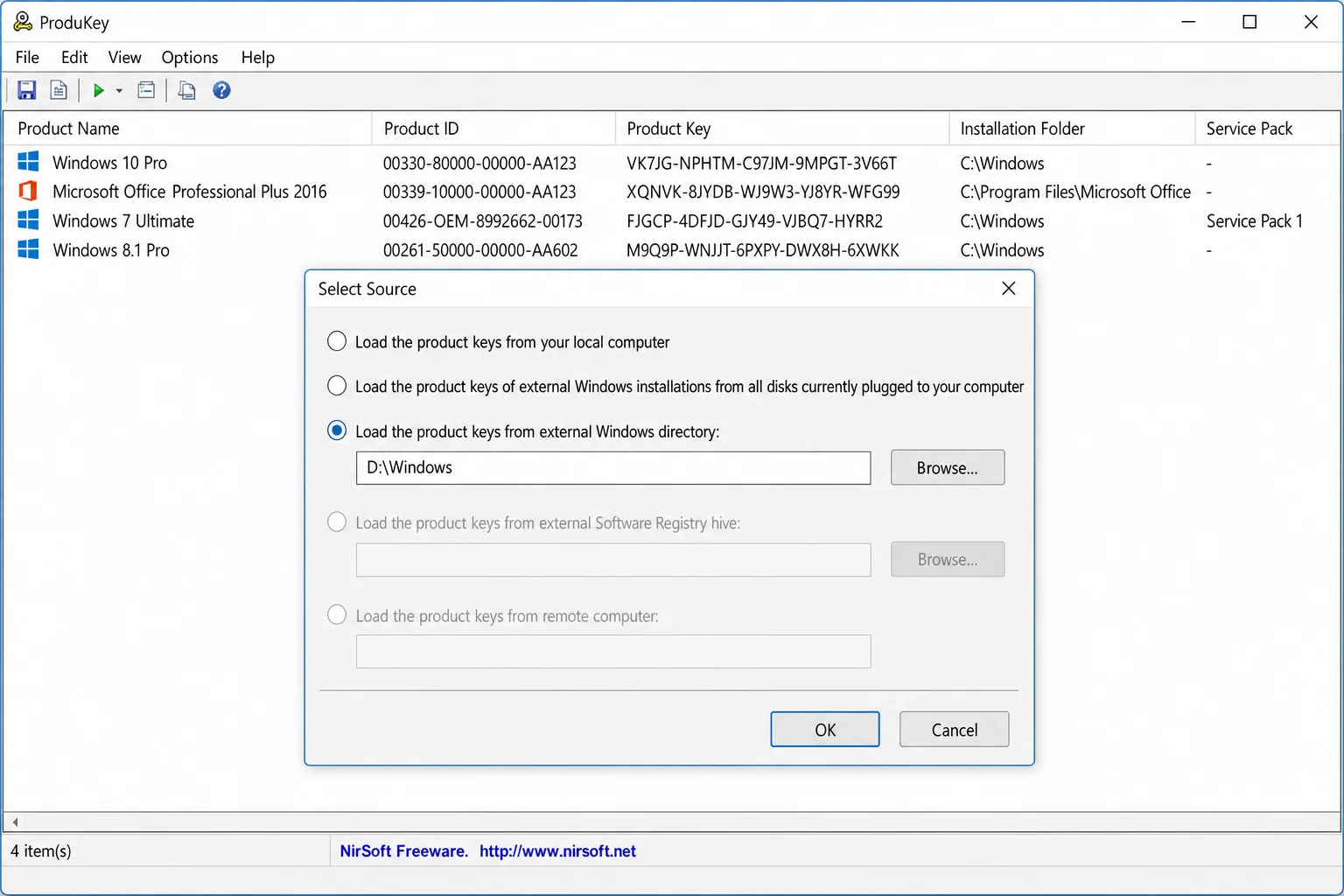
- Go to File > Select Source.
- Choose Load the product keys from external Windows directory.
- Browse to the old drive’s
Windowsfolder (e.g.,D:\Windows).
- ProduKey loads the SOFTWARE hive from that installation and lists the keys it finds.
Antivirus warning: Windows Defender and many third-party AV tools flag ProduKey as a Potentially Unwanted Program (PUP) because it’s also used in piracy toolkits. It’s not malicious when downloaded from the official NirSoft site, but you may need to temporarily allow it in your AV settings to run it.
What you might see for Windows 10/11: ProduKey often returns a generic KMS client key rather than your actual activation key. That’s normal and doesn’t mean the tool is broken. Your real activation is handled by the digital license, not that key string.
Method 3: Use LicenseCrawler for Third-Party App Keys
LicenseCrawler crawls the registry and pulls serial numbers and license keys for a wide range of installed software, not just Windows and Office. It’s the better choice when you need to recover keys for games, utilities, and other desktop apps.
- Download the portable ZIP version of LicenseCrawler from the official site: klinzmann.name/licensecrawler
- Extract the ZIP and right-click LicenseCrawler.exe, then select Run as administrator.
- Select your language and accept the license agreement when prompted.
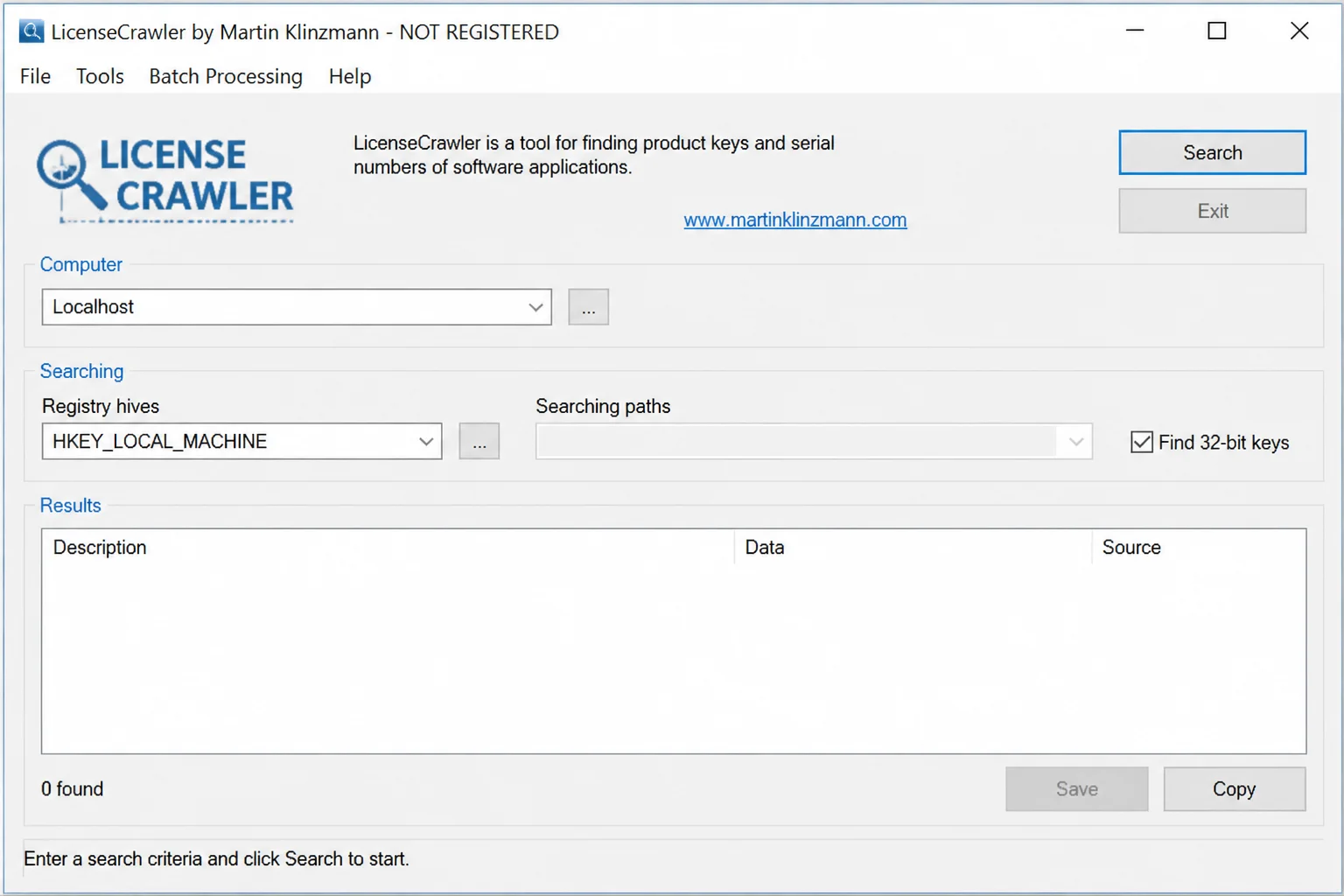
- Leave the Computer field set to Localhost and the registry path set to HKEY_LOCAL_MACHINE.
- Click Search. Some ad dialogs may appear, click Disable this Screen or wait for the countdown to dismiss them.
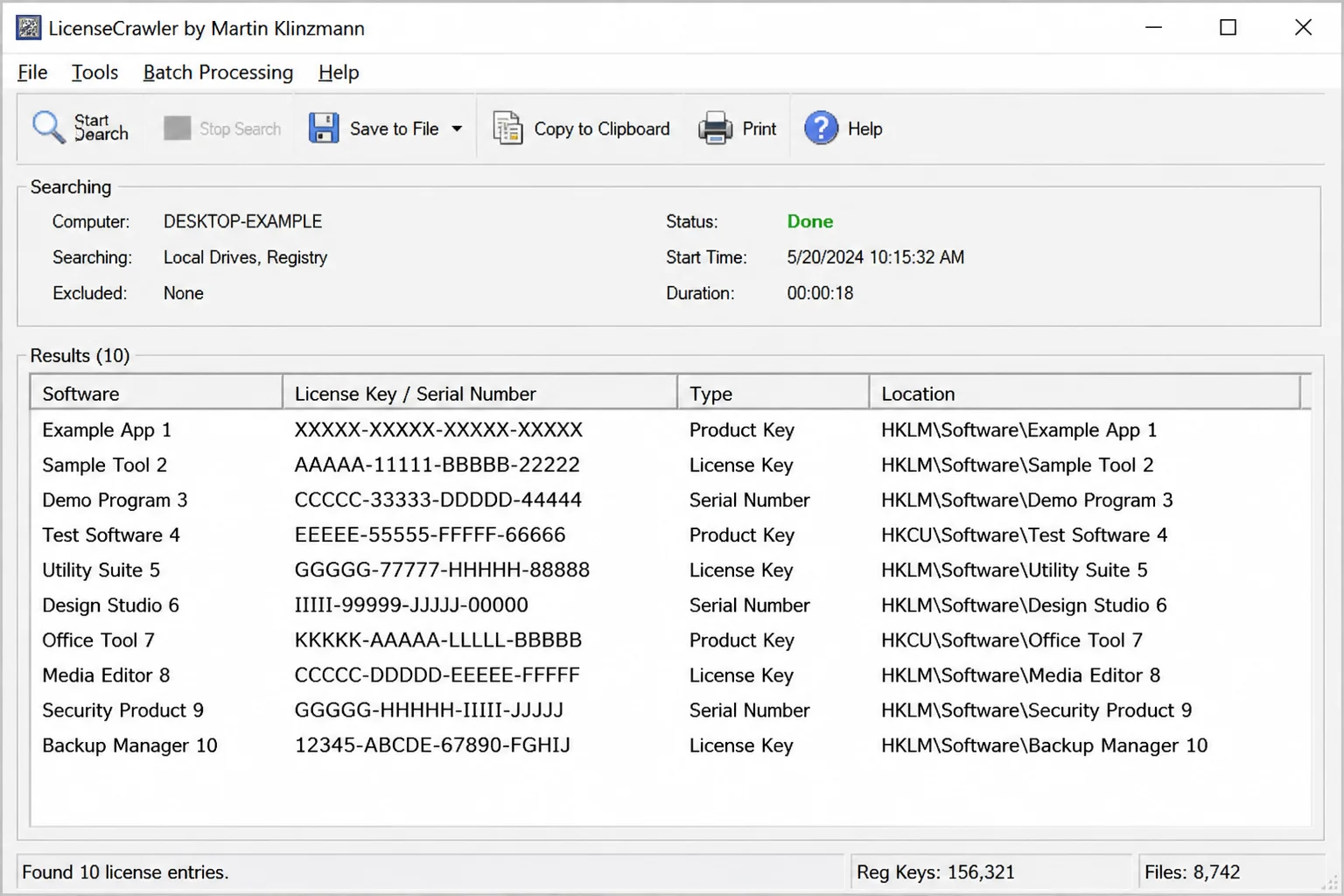
- When the scan finishes, the results pane shows all found keys and serial numbers.
- To save the results, go to File > Save Encrypted (recommended) or File > Save for plain text.
Save results as an encrypted file
- Select File > Save Encrypted.
- In the Save As dialog, choose a location and enter a filename, then click Save.
- Enter a password in the Save file encrypted dialog and click OK.
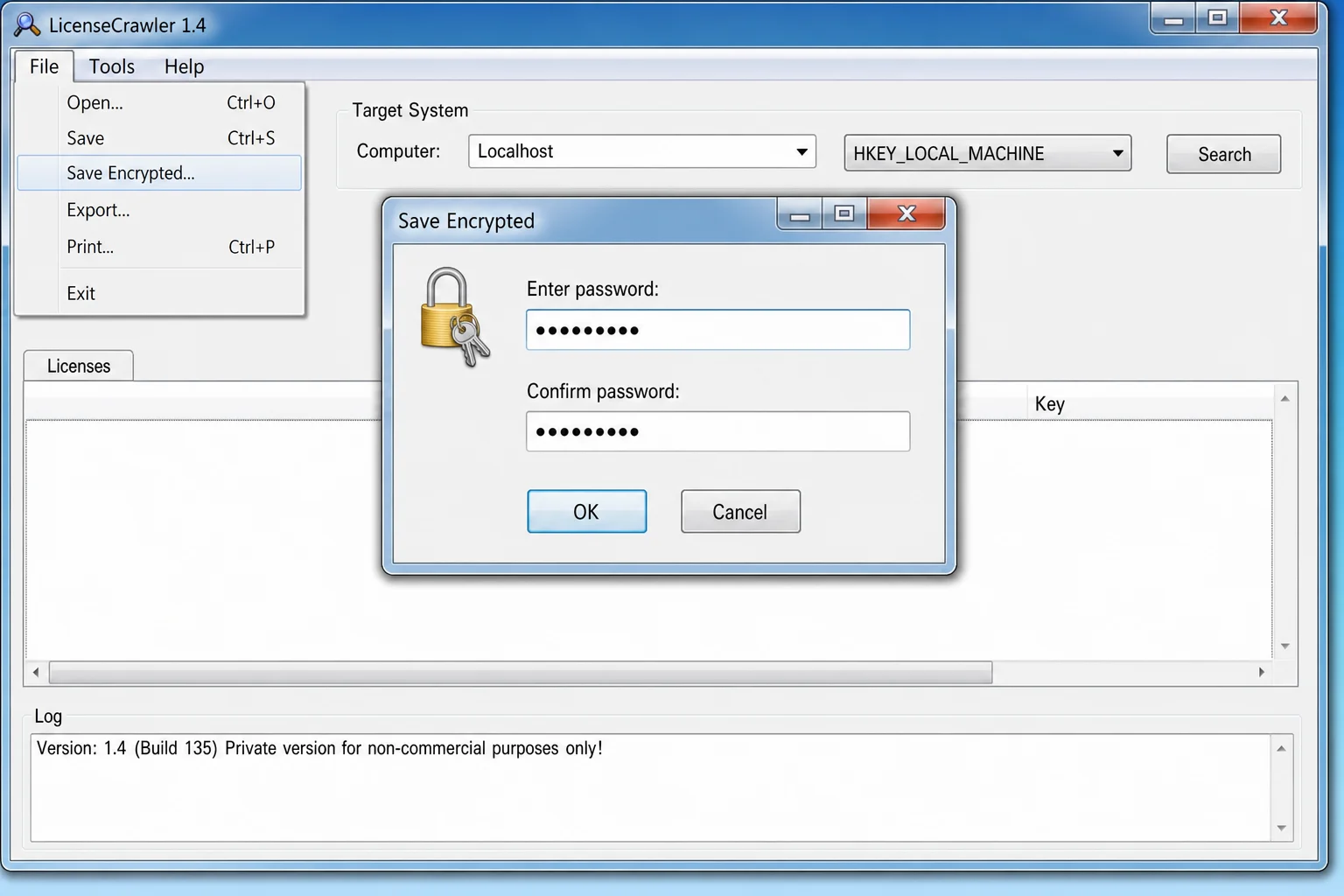
To open the encrypted file later, open LicenseCrawler, go to File > Load, select the file, and enter your password.
Tip: Save the entire LicenseCrawler folder to an external drive. That way your keys and the tool to read them are in one place after a reinstall.
Licensing note: LicenseCrawler is free for personal use. Commercial use requires a paid license. Download only from the official site. Like ProduKey, it may be flagged by AV as a PUP.
Method 4: Use Belarc Advisor or Recover Keys for a Full Software Inventory
If you have a lot of different software installed and want a comprehensive key report, two tools cover more ground than ProduKey or LicenseCrawler alone.
Belarc Advisor (free for personal use)
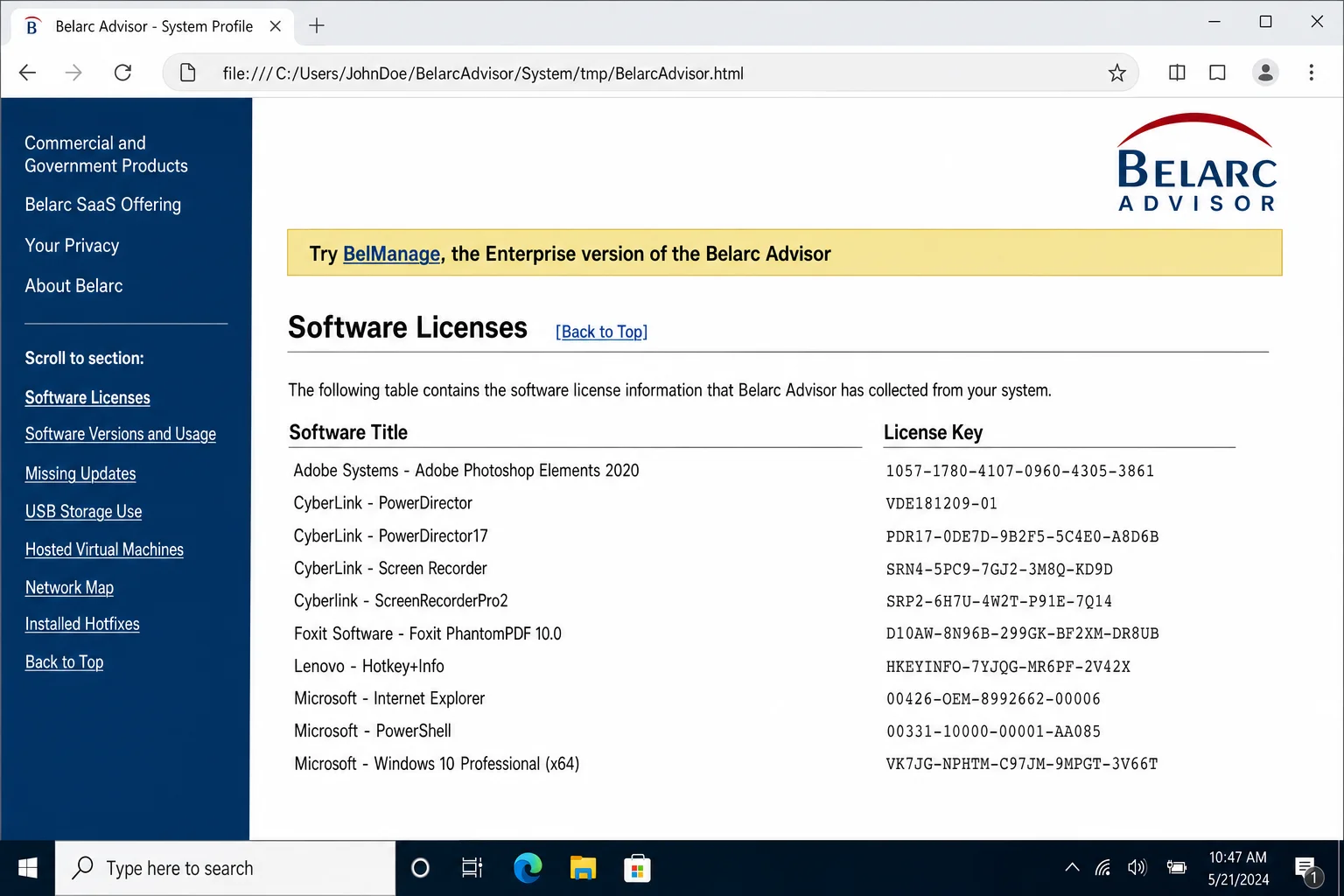
Belarc Advisor scans your PC and generates a local HTML report that includes a Software Licenses section. It also reports installed hardware, security status, and missing Windows updates, which is useful to have before a reinstall.
- Download Belarc Advisor from belarc.com.
- Install and run it. The scan takes a few minutes.
- When the scan finishes, it opens a local HTML page in your browser showing all detected software licenses.
- Save or print the page before you reinstall Windows.
Recover Keys (paid, ~$30)
Recover Keys supports over 11,000 programs and is worth it if you’re managing a PC with a large number of licensed applications. It can also scan remote machines and export results in multiple formats. Download from recover-keys.com.
Common Questions
Why does the key finder show a key that doesn’t work?
On Windows 10/11, key finders often return a generic KMS client key. These are built into Windows and are not individually transferable. Your actual activation relies on a digital license, not that key string.
I reinstalled Windows and it activated automatically, is that normal?
Yes. If your system has a digital license or a BIOS-embedded OEM key, Windows detects it when you connect to the internet and activates on its own. You don’t need to enter anything.
Can I move my Windows key to a different PC?
OEM keys (from pre-built PCs) are tied to the original hardware and are non-transferable. Retail keys can generally be moved but may require phone or online reactivation. Generic KMS keys recovered by key finders are not individually transferable.
Can I recover keys for Microsoft 365 or Adobe Creative Cloud?
No. These are subscription products activated via your online account, so there’s no locally stored key to recover. Sign into your Microsoft or Adobe account and manage your installs from there.
Can I recover keys from a PC that won’t boot?
Yes. Remove the drive, connect it to a working PC via USB, then use ProduKey’s Select Source option to point it at the old drive’s Windows folder. LicenseCrawler can also load an external registry hive for the same purpose.
Why does my antivirus flag these tools?
Key finder tools are frequently bundled into piracy toolkits, so security software classifies them as PUPs (Potentially Unwanted Programs) by default. Tools downloaded directly from NirSoft or the official LicenseCrawler site are clean, but you may need to whitelist them in Windows Defender or your AV to run them.
Conclusion
For most people, checking the Activation page in Settings first tells you whether you even need a key. If Windows shows a digital license, you’re already covered for reinstalls on the same hardware. For recovering third-party app keys, LicenseCrawler handles the broadest range of software, while ProduKey is the better pick if you specifically need to pull keys from an old or dead Windows installation. Run whichever tool applies, save the results to an encrypted file on an external drive, and you won’t be scrambling before your next reinstall.